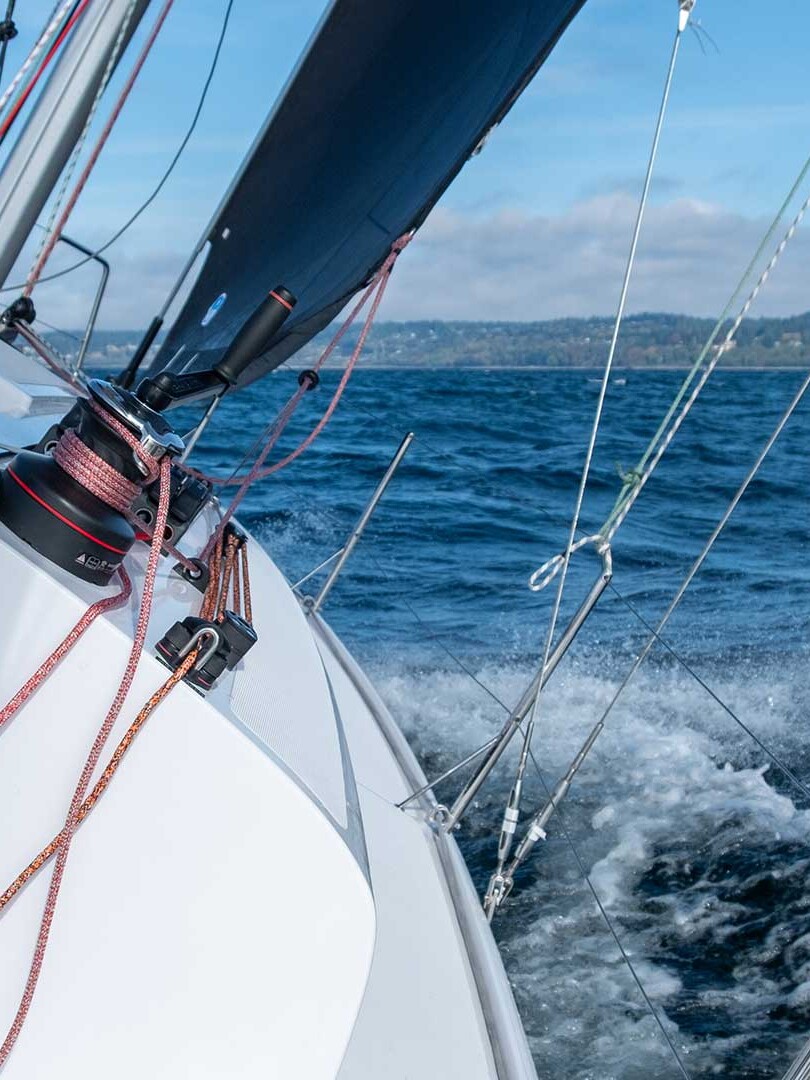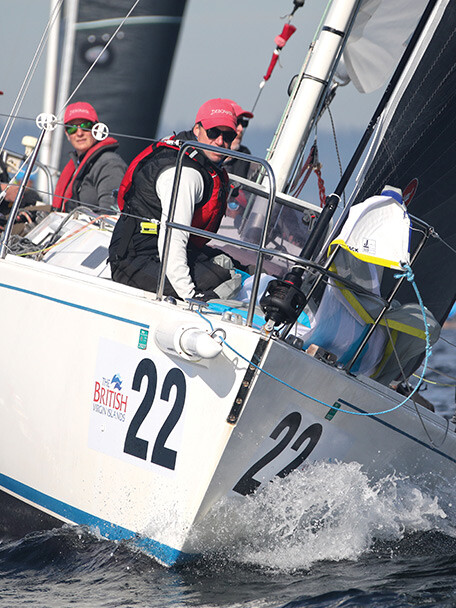
There is a photo of our training boat, IC37 Westerly, from a December day last year that has taken on a little more meaning since we came home from New York Yacht Club’s inaugural Women’s International Championship held in Newport, Rhode Island on September 12-19. In the photo, we are sailing downwind toward a rainbow stretched across the water in front of us, almost like the downwind finish line we would eventually race toward in Newport. There are no boats ahead. Looking at it now, it is hard not to see a little of the race we would go on to win.
At the time, it was just a beautiful photo. Now, it feels pretty fitting.
For almost two years, Newport was somewhere out there in front of us. And between that December training day and finally getting there, an enormous amount of work went into closing the distance. Somewhere in all of that, we became a team. We started from scratch and there was a group of people willing to say, “Sure, let’s do it.” In retrospect, there was a certain amount of audacity in that.
And maybe that was exactly what it took.
The Team We Built
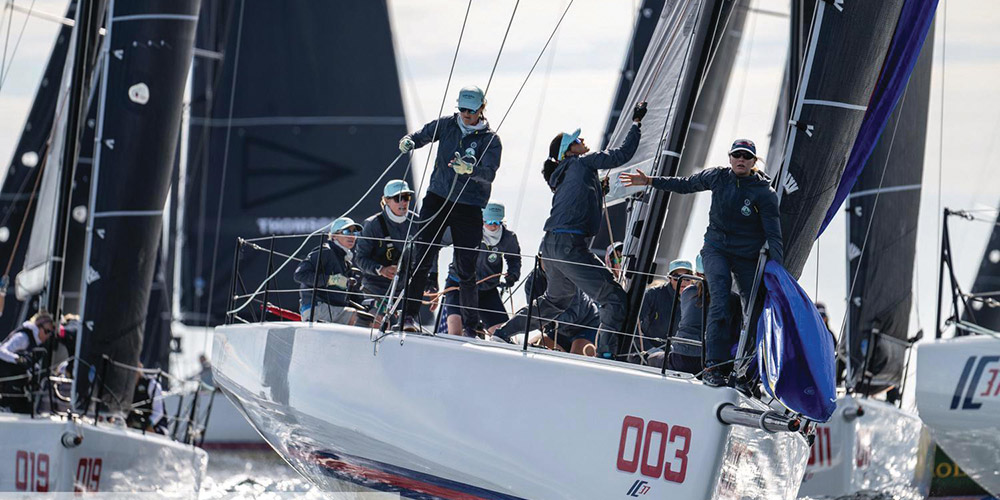
Cascadia Sailing started when founders Chris Wolfe and Joy Dahlgren each reached out to talented sailors they knew on either side of the border. A few others were involved early on, but ultimately realized the time commitment was more than they could take on. Eventually, we had eleven women from Washington and British Columbia who were fully on board.
We assumed we would need to choose ten sailors for the championship because of the crew weight limit. Then our tactician Jen Morgan Glass suggested that if we all worked a little on our weight, we could sail with all eleven, be close to the maximum crew weight, and have an extra set of hands to help with the demands of the boat.
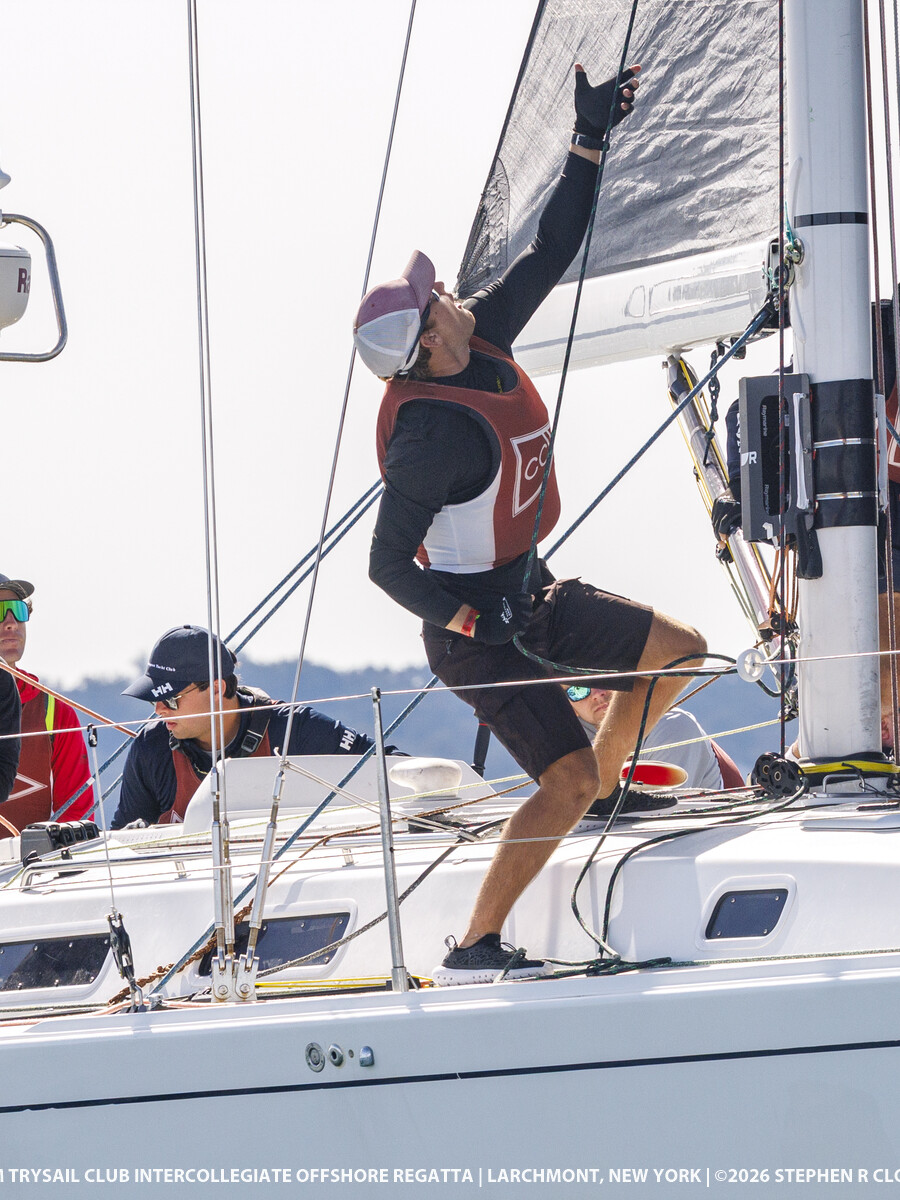
Looking back, sailing with all eleven feels like an important part of our story. We came away from the championship feeling that our crew work was some of the best on the racecourse, and we believe that was a big part of what allowed us to put together the race we won.
Getting to the start line ready to compete was a huge accomplishment. Considering the geography, jobs, families, travel, health challenges, schedules, and almost two years of commitment involved, the fact that the crew stayed together may have been one of the least complicated parts of the campaign. That does not mean it was always easy.
By Safe Harbor (our practice regatta in early August), the championship was getting close and the pressure was becoming real. We had invested a huge amount of time, money, and energy into the campaign. We all cared deeply about doing well, and eleven people who care deeply do not always see things the same way. There were a lot of personalities. A lot of different ways of communicating and, of course, so many opinions. It could have completely unravelled, and to be honest, some of that tension inevitably surfaced.
Then, when the first gun went off for the Women’s International Championship, something changed, we just had to make it work. We had to communicate. We had to trust each other. We had to recover quickly when something went wrong, because things inevitably will.
From that moment, it felt almost like there was a silent pact between us: whatever happened that week, we were going to come through it together. No one said it. We didn’t need to.
We were well aware of the talent on the 19 other boats. Olympians. World champions. America’s Cup sailors. Women who had competed at the highest levels of the sport. And we were lining up next to them.
On the racecourse, we needed to stay calm, race as hard as we could, and not let a mistake or moment of frustration follow us around the course. Inches were what mattered in a fleet this competitive. We compartmentalized, debriefed what we could between races, and talked through the bigger things at the end of each day so we could keep improving.
There were difficult races. There were mistakes. There were moments of frustration. There were also huge breakthroughs, and one race none of us will ever forget, where everything came together and we got the gun. Literally. We were handed the shotgun shell afterwards.
That race was one pretty wonderful piece of evidence of how far this slightly improbable team from the Pacific Northwest had come. But through all of it, the team stayed the team. That may sound like a small thing compared with the racing, but anyone who has been part of a competitive campaign with a big team knows it isn’t. Team dynamics can derail an event just as quickly as anything that happens on the racecourse.
Cascadia somehow did the opposite. We continued to grow as a team right until the end.
When it was time to say goodbye in Newport, after everything we had asked of one another, people genuinely did not seem ready for it to be over.
Three Seattle teammates reunited at the PSSC small boat regatta the weekend after the championship, and four of the Victoria teammates were back on Westerly together for the Thermopylae Regatta only two weeks after the championship.
For eleven sailors from different sailing backgrounds, many of whom had never met, let alone sailed together, coming out the other side still wanting to be together says a lot about what we built together.
Cascadia’s 12th!
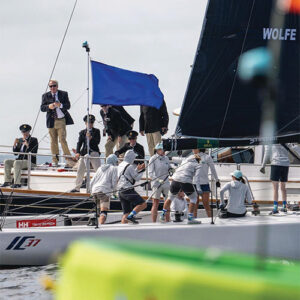
The eleven of us may have been the ones on the boat, but Cascadia was never just eleven people.
Around us grew a much bigger team of people who believed in what we were trying to do and, again and again, found ways to help us get there. People shared knowledge that had taken them years to build. Coaches gave us their time. Sailors came out simply so we would have another boat to practice against, or stepped in when we were short on crew. Others opened their homes, donated, sponsored us, came to our events, followed along from afar, and kept asking how they could help.
Businesses backed us, with special thanks to Mustang Survival, Arntson Marine, and PYI. Yacht clubs supported us, especially Seattle Yacht Club and Royal Victoria Yacht Club. Friends and family tolerated an awful lot of conversation about an IC37 regatta taking place on the other side of the continent.
What made that support so meaningful was that people were willing to invest in Cascadia Sailing long before we had any proof of what it might become. They believed in the idea, in the team, and in the value of giving a group of women from across the Pacific Northwest the chance to take on something ambitious.
And then they kept showing up.
By the time we arrived in Newport, there were a lot of people invested in seeing us get to the starting line and do well, including a huge contingent of supporters who travelled all the way to Newport to cheer us on.
At that point, it no longer felt like eleven women had made it there. It felt like a whole community had. We simply would not have been able to do what we did without all of you.
What Comes Next?
People started asking what comes next for Cascadia Sailing before we had even unpacked. Honestly, we don’t know.
And for once, we are reasonably comfortable not having a plan. We are still decompressing from nearly two years when there was always another practice, another deadline, another fundraiser or another problem waiting to be solved. It seems worth spending a little time simply appreciating what has happened.
But after everything that went into creating Cascadia Sailing and this campaign, it is hard to imagine this is simply where it ends.
We built too many connections. We got too many people excited. We learned too much. And we had far too much fun. Only time will tell what the next version looks like. But we think there will be one.
For now, we can look back at our rainbow finish line and all the memories of the last two years and think: Look at what we did.
And maybe that is what we hope others take from the Cascadia story. Sometimes you just need enough audacity to start, and the willingness to figure it out along the way.
We certainly did not know exactly where this would lead when we began. We just knew it was worth finding out. And look where it took us.