As a marine mechanic, I find myself traveling all over to fix diesel engines, but there are also a lot of repairs that I help with from the comforts of my boat. Sometimes, travel is out of the question for various reasons, or my clients find themselves stuck in a place that I can’t get to easily or quickly. In this case, I find myself spending time walking them through a repair over the phone.
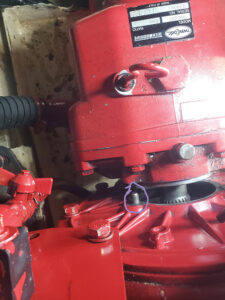
Recently, a couple of friends reached out for help from Mexico with a rather dramatic, yet manageable, issue at hand. Between their resourcefulness and a little bit of aid on my part (mostly motivational speaking), they were able to make the repair and continue on with their adventure.
This kind of assistance and success for clients has always been important to me, professionally and personally. In the nine years I’ve run my own business, I’ve been guided by the foundational concept and desire to help people by teaching them to help themselves when it comes to boat repair; not just jumping on and effecting a repair myself. Mariners of all stripes value and require self-reliance, so it’s an understandable focus that most boaters share. There isn’t always help nearby, and that can put the vessel at risk, sometimes even posing a danger to its crew. When something goes wrong, having enough knowledge to fix the problem so you can get home is very important. There’s a reason I preach about that so much in this column.
While I don’t expect average boaters to be full-blown mechanics, it’s important to me that everyone understands where certain parts are and how they work, so if they are out on their own and need help they can reach out and identify what they are seeing.
Michael and Melissa are great examples of this. Over the years, they’ve been friends, customers, and even helpful “employees” when I needed assistance getting to work due to some health issues. We were dockmates in Olympia, and I watched as they prepped their boat for cruising far and wide. Both of them were extremely diligent in preparing the boat for safety, and joined many classes and seminars to learn as much as they could before leaving the dock. Little did they know, this would pay off immensely for them.
Off they sailed and, though it was bittersweet to watch friends go, I was very happy they were chasing this big dream. They’ve been out cruising for a couple of years and I got a call from Michael the other day after work. I was excited to hear from him, but I immediately picked-up the concerning tone in his voice. “We’ve kind of got a major issue, our transmission has separated from the engine,” he told me.
After a few deep breaths and a deeper conversation trying to understand and diagnose the problem, they sent me several photographs and I was able to get an idea of what had actually happened. Their 47-foot Olympic Adventure center cockpit ketch, Galapagos, has a Beta 4-cylinder marine diesel engine as her main propulsion.
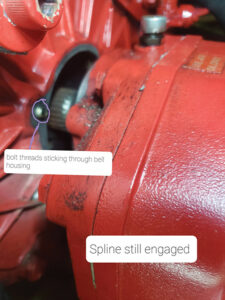
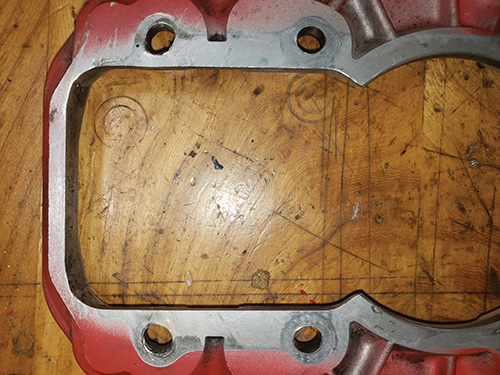
The issue at hand was a rare and very odd one at best. Beta uses a Twin Disc reverse gear. This gear housing had separated from the bell housing because the mounting bolts had loosened and backed themselves out. The gear housing is bolted to the marine gear with four to six bolts, depending on make and model. In this case, the four bolts on Michael and Melissa’s engine were completely dislodged and the entire housing had moved aft away from the engine by approximately an inch.
The engine is only a few years old and came from the factory with this reverse gear and adapter plate installed, so it appeared to have been a factory defect that maybe wasn’t double checked prior to delivery to the customer. Without removing the reverse gear and bell housing, no one could’ve seen this coming; nor is it something most boaters need to worry about, since these bolts should typically be installed with Loctite or something similar.
Michael informed me that they were anchored in a quiet location in the Sea of Cortez where not many other cruisers visit often. They were also far enough away from any sort of yard that it would’ve been difficult to try and get towed in. Luckily, they were in a protected area and the boat was safe. Due to their diligence in preparing the boat so well, not only did they have the tools required to pull the engine apart, but they also had a bottle jack to lift the rear end of the engine off the motor mounts to separate the reverse gear from the engine block. Michael got the job done in less than a day and sent me updates of his success. I was impressed and relieved, though my relief paled in comparison to theirs. The engine was up and running the next day, and both of them were able to rest easy after a job well done.
In a situation that could have ranged from inconvenient to expensive to dangerous, this was an example of a repair done on the fly that went well due to Michael and Melissa’s efforts to prep the boat properly and educate themselves on the basics of the engine and its surrounding parts. Thanks to their thoughtful preparation, they were able to describe exactly what was going on over the phone to me. I was then able to explain how I would approach the repair and they could confirm with pictures whether what I was suggesting would work or not. Their layers of preparation also contributed to their confidence to tackle the project themselves, instead of simply giving up and calling for a tow to a boatyard.
Stuff like this makes my heart happy—I really didn’t have to do much, and was able to watch them succeed from afar while they were in a remote location without mechanical assistance nearby. It’s a story that aligns with the goals I have for many of my customers and friends, that they are able to self-help themselves when needed.
In a world where boats are as connected to the digital world as the owner desires, it’s ever easier for me to be a phone call or email away, but I can’t always physically be there. When cruising, these basic make-or-break skillsets, tools, and bits of knowledge are always worthy to pursue and cherish. They can truly save lives or the vessel when it comes to crunch time.
Meredith Anderson is the owner of Madame Diesel, LLC, where she operates a mobile mechanic service and teaches hands-on marine diesel classes to groups and in private classes aboard clients’ own vessels.