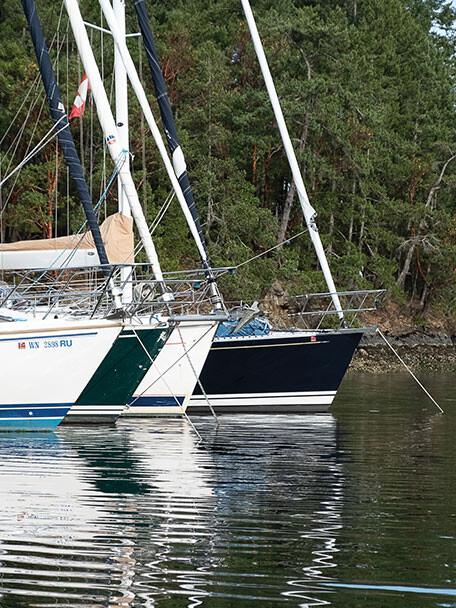
Sitting in the cockpit at anchor in the peaceful laguna at Barra de Navidad, Mexico, I’m listening to the ker-splash of pelicans dive-bombing for fish around our boat. The afternoon breeze has just sprung up, the fleet of sailboats around us are dancing on their bridles, and I have a cold chelada on the table next to my laptop. Life is good here, and it’s hard to believe that it’s been almost seven months since my wife Lisa and I cut the docklines at Port Townsend, our last port of call in the Pacific Northwest.
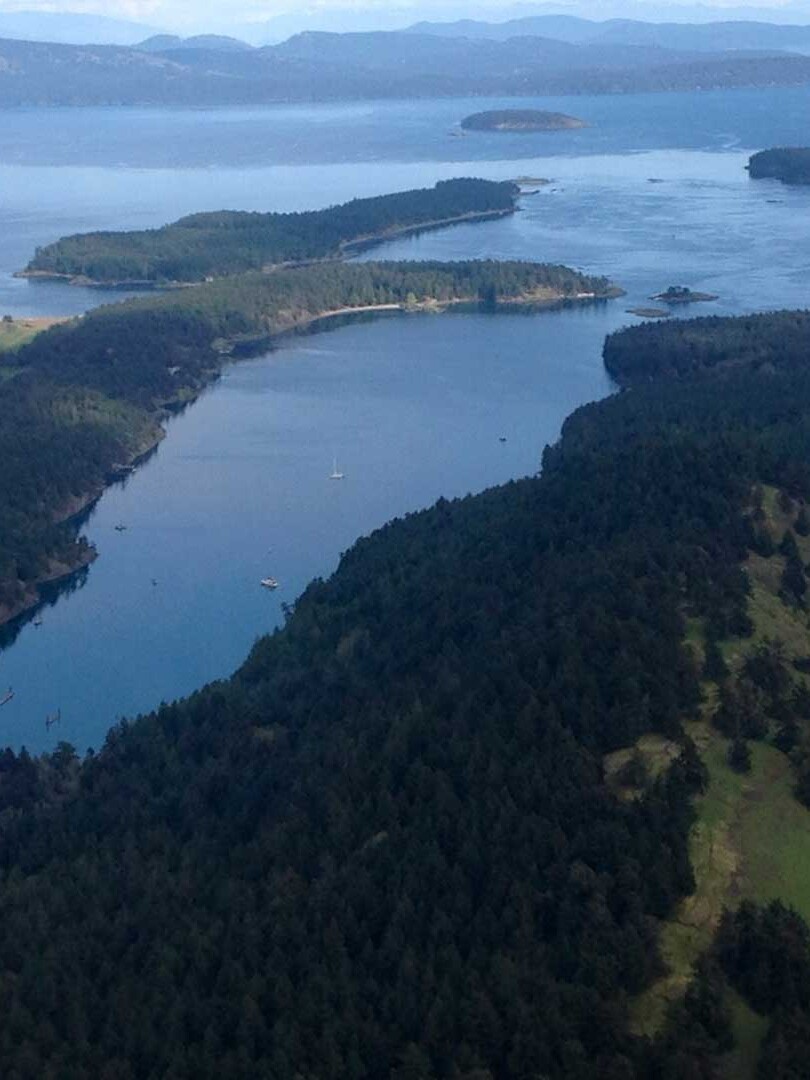
Prior to that, our home was in Ballard and we had a happy two decades cruising the Salish Sea and generally messing about in a variety of sailboats of slowly increasing comforts. The cruising grounds of Puget Sound and the San Juan and Gulf Islands provided many delightful and rewarding outings on weekends or whenever we could grab a couple of weeks off work. Although we could easily have stayed in the PNW indefinitely, like many local sailors, we often dreamed of and discussed the possibility of living aboard and cruising full-time for a spell. After some years of education and planning, we felt ready.
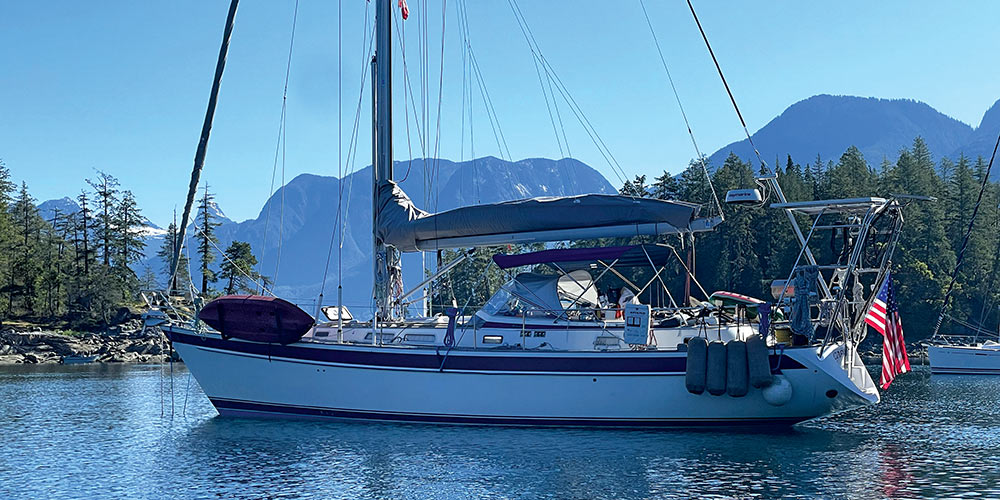
Our first major step was the purchase of our current home, the 1999 Hallberg-Rassy 42F Capricorn, in late 2021. Over the next few years we refit her for bluewater cruising, with the addition of a watermaker, more solar, lithium batteries, and a new rig and sail wardrobe. After a three-month shakedown exploring both sides of Vancouver Island, we took the plunge and that alluring and momentous left turn last August.
Prepared as we were, we learned and realized many new things along the way from Cape Flattery to Cabo San Lucas and beyond, and I’d like to share them here to help other cruisers who are thinking about making the journey.
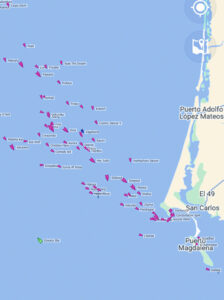
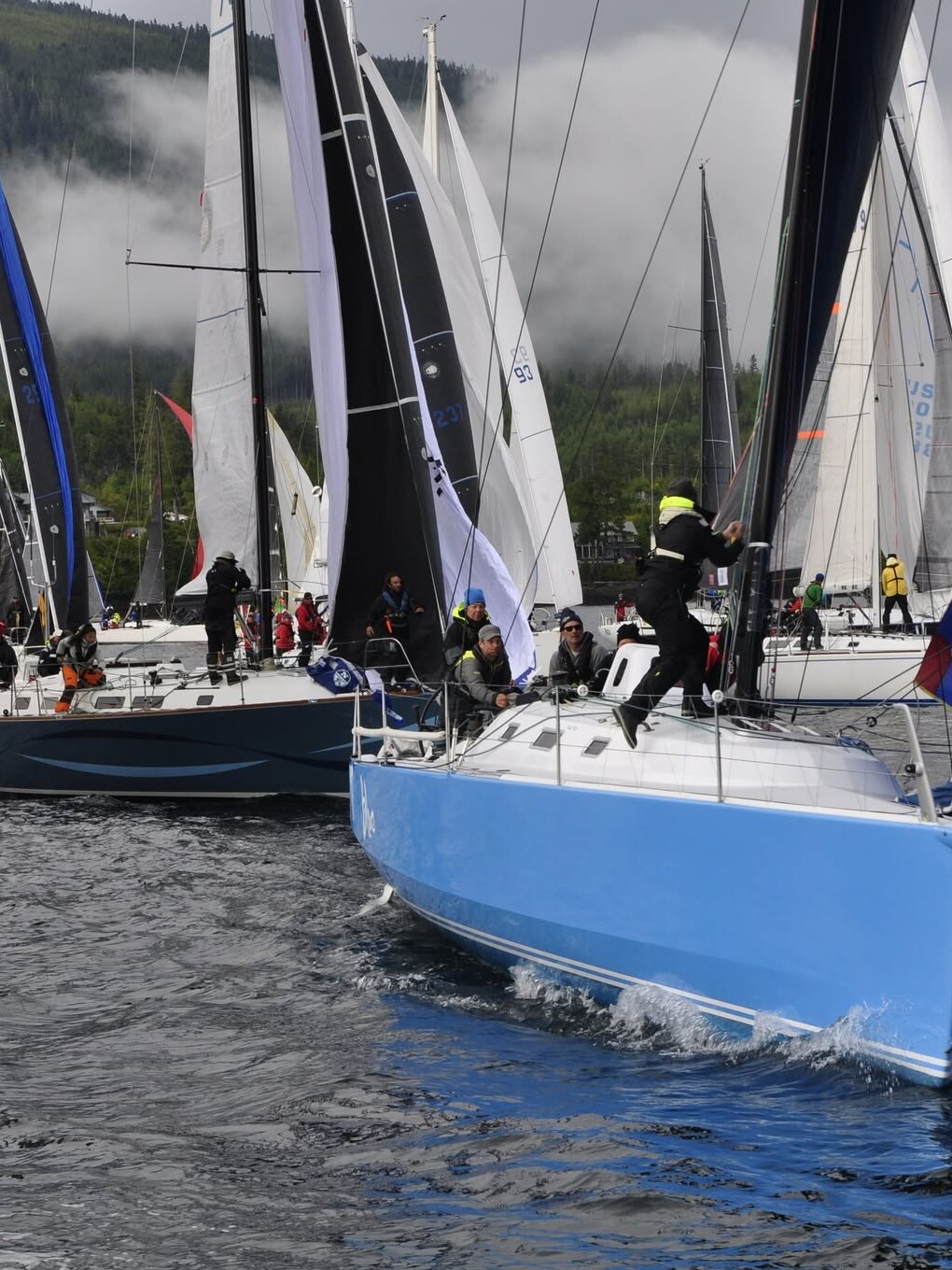
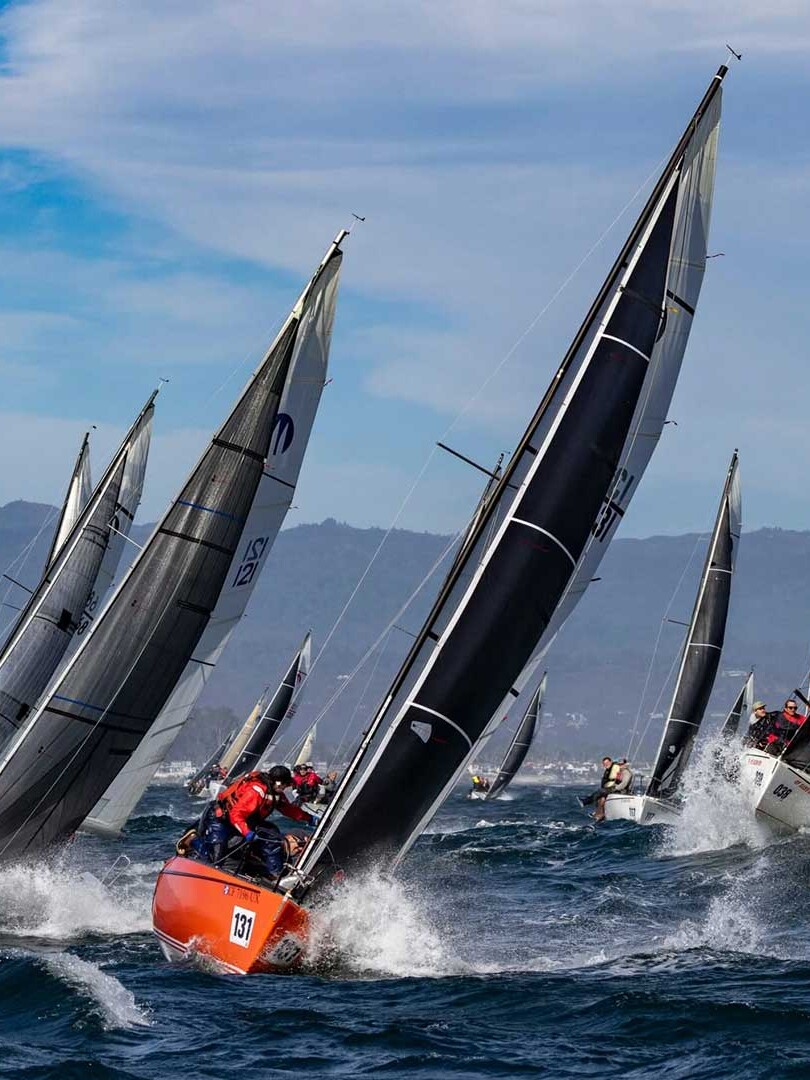
Consider being part of a group: On our trip south, we joined the Coho Ho Ho Rally from Seattle to San Francisco and then the Baja Ha-Ha Rally from San Diego to Cabo San Lucas. For sure, many make the trip independently and there’s certainly something to be said for the solitude and freedom of the independent cruiser. However, we benefited greatly by being part of both rallies, and we continue to benefit. In particular, the Coho got us feeling well prepared with its comprehensive program of seminars and social events, which we enjoyed prior to our voyaging.
On both legs, it was comforting and useful to have a fleet around us that we could call on for assistance or message for reports on weather, sea state, and even obstacles to avoid like fishing gear and kelp patches. As we made our way down the California coast, the excitement started to build while encountering ever more boats flying Baja Ha-Ha burgees, and this icebreaker led to amazing friendships that we’re still enjoying as we continue to cross paths down here in Mexico. Even more than half a year later, our Coho WhatsApp group is still quite active with lifelong cruising friends.
Most obvious and, perhaps most important of all, being part of a fleet is a huge safety net. There were several occasions on the Ha-Ha where we were able to help fellow cruisers with problems; and when we had a mechanical failure that left us without auxiliary power, it was comforting to discuss possible solutions with a variety of fellow sailors. It was also reassuring to know that, in the event that we couldn’t fix it ourselves, we had folks around us just a radio call away. And seeing the fleet spring into action when one participant’s PLB was activated (mercifully, a false alarm) made me quite glad that we weren’t doing this completely alone.
A question of crew: For the two major passages from Seattle to San Francisco, and San Diego to Cabo, we had two crew members join us—good friends from Seattle with sailing experience. It was the first time we’d made any multi-day passages and if I had any doubts before about whether it was necessary, these were dispelled quickly after the first night. As skipper, I slept much better knowing that there were a couple of savvy people on deck as we were propelled down the Oregon coast with 35 knots of wind behind us and seas to match.
We’ve completed a few overnight passages since then with just the two of us aboard, but we pick our weather windows carefully and I always sleep for at least a day afterward. Extra crew can be helpful for the long runs, and quality crew is best.
Fit sails and a rig that you’ll use: While I was prepared mentally for the transition from the relatively calm waters of Puget Sound to the heavy swells and wind waves of the North Pacific, I think I might have overestimated my desire to be up on the foredeck wrestling with our sail wardrobe in ocean conditions. Before we left, we removed our furling staysail and replaced it with a detachable stay and hanked-on storm jib. We also kept our cruising gennaker and sock but turned down the option to rig a furling light-air sail like a cruising Code Zero. Looking back, I feel both were errors.
Going down the coast, you’ll be going dead downwind in light air often, so it’s worth rigging an effective light air sail that you’ll actually want to use even when shorthanded. On a similar note, preparing for heavy weather is a must and, in hindsight (and given that we really don’t tack that often) I’d rather live with a furling heavy-weather staysail that is simple to deploy than having to ride the bull on the foredeck contending with halyards and hanks in heavy seas. Of course, these are personal choices, so do what is right for you, your crew, and your boat.
One of the things that we did right was to have a well thought-out and easy to use boom preventer system. Even in a fresh breeze with a good amount of pressure on the sail, the motion of the ocean will move that boom around. We have a system with two pendants long enough to reach the mast from their attachment point at the end of the boom that we can shackle to lines on each side that run to blocks on the bow and then back to stern cleats. With this setup, we can rig a preventer even with the boom already out and can reconfigure for a jibe without having to go forward. Easy is safe!
Prepare for night sailing: Night sailing is a fact of passagemaking life, yet we hadn’t practiced this skill often before leaving Seattle. It’s true that once offshore, encountering traffic or errant deadheads is a lot less likely; however there are still hazards. For one, we found that it’s rare for fishing vessels to transmit on AIS, certainly south of the border. We also found that our backstay-mounted radar did not do well identifying anything smaller than a container ship when in boisterous offshore seas. Fortunately, most fishing vessels are well lit and may even respond to a hail on the VHF or a powerful spotlight shone on the mainsail. The same cannot be said for their gear, and while we deliberately stayed at distances offshore that we felt were beyond most fishing operations, coming into land in the dark was always a nerve-racking operation.
Land is notoriously the greatest peril for a mariner, and arriving into a new anchorage at night is going to happen. We were advised, in grave and grim tones, never to trust charts in Mexico and could recall terrible accounts of boats being sunk on rocks only minutes from a safe anchorage on the Baja coast. Thus, we were justly cautious on our midnight approach into Bahía Tortugas. Having radar on was a huge confidence booster and a great help in selecting an anchoring spot among a fleet of more than a hundred boats. But one of the greatest aids was the gift of a number of GPS tracks we received on a thumbdrive from a friend we met in Long Beach. Knowing that another boat with a similar draft successfully made a specific passage without trouble was a great asset in planning our route, night or day.
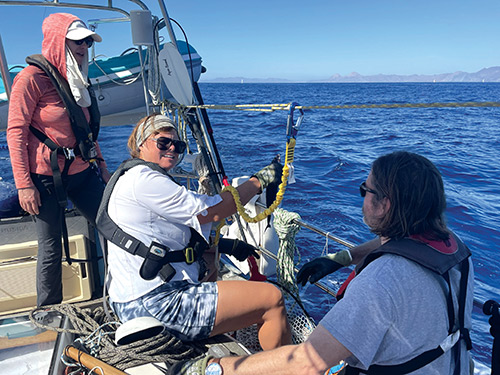
Bring your fishing gear: While we are not exactly avid fisherfolk and seldom tried to catch our own dinner in the Salish Sea, it’s a long journey and pretty much everyone in the fleet had fishing gear out while passagemaking. We listened to many VHF reports of successful catches of dorado and yellowtail from the fleet and even enjoyed our own fresh tuna poke on Capricorn.
If you’re a sophisticated angler, you already know what to do; but for us dilettantes I found it sufficient to deploy a plain unpainted cedar plug with fifty feet of strong line from a stern cleat and just reel in the catches. Note that in San Diego a week before the Ha-Ha, chandleries can be completely picked over for gear, so prepare in advance.
California is a great cruising ground: If you’re Baja bound, don’t miss the rare opportunity for a Pacific Northwest sailor to explore the diverse cruising ground from San Francisco to San Diego. Though we had three fun weeks exploring several locations in San Francisco Bay and loved the festival-like pre-Ha-Ha atmosphere berthed at the police dock in San Diego, to me the real highlights were along the way.
Whether it’s vibrant and historical Monterrey, or the quiet fishing and surfing town of Half Moon Bay, the northern coast has many places to offer that have a unique character all their own. The rugged and undeveloped northern Channel Islands are a must-see, and an almost familiar landscape to anyone who has sailed in some of the wild places on the British Columbia coast. Don’t miss these pristine anchorages.
As we ventured farther south of Cape Conception, things were more developed but still quite wonderful. We had warm greetings in Ventura, and a most enjoyable dinner as reciprocal guests of the local yacht club. We snorkeled in crystal clear waters off Santa Catalina, where late season deals in October make finding moorings fairly affordable. And we ventured into the heart of Los Angeles in Marina del Rey for easy access to shopping and an evening of culture.
You’ll love your watermaker: Having a watermaker in the Pacific Northwest is perhaps only essential for seriously off-grid expeditions, if at all. South of the border, on the other hand, it feels more like a necessity. Although the marinas here will generally have water faucets at the docks, we have only encountered one marina with water deemed safe to drink by our fellow cruisers. Moreover, there’s practically no rainwater during the peak winter cruising season. The rest of the time, you’re either using your watermaker or dealing with the hassle of purified water delivered via 5 gallon garrafón.
There are plenty of boats doing quite fine without watermakers, but we’ve had to help one out with donations from our own tank. It’s nice to feel self-reliant for this necessity, but mainly I don’t envy those near-constant dinghy trips loaded up with jerry cans.
Our watermaker is a one-kilowatt AC beast that delivers around 25 gallons per hour. While I do love it, I have a somewhat adulterous lust toward those more efficient types that use energy recovery pumps and run on DC. Ours was relatively inexpensive and works fine, but it’s also bone-shakingly noisy and requires the engine or generator to be on to avoid draining the batteries. If I had it to do all over again, I’d rather splurge to have something quiet that we can run without burning diesel.
Power is at a premium: The topic of watermakers is a good segue into the topic of energy and electrical power. It’s no joke that one of the most common conversations amongst cruisers is the state of charge of your batteries. Like a good prospective voyager, I carefully compiled an energy budget figuring that we had more than enough solar to keep our batteries full. Unfortunately, I underestimated demand and overestimated supply.
With the need to take showers daily in the Mexico heat, we’re leaning fairly heavily on our watermaker, and our desire to stay connected means that our Starlink is on more often than not. But the real power hogs are our refrigerator and the integrated cooler/freezer that we added along the way. Any kind of refrigeration will be working so much harder in the tropics, probably using double the power that we were accustomed to cruising the Salish Sea.
As for supply, it is reliably sunny in Mexico, but not so fast—being closer to the equator and with winter being peak cruising season, the days are much shorter than we were used to cruising at higher latitudes. We’ve been in several marinas in Mexico watching welders add larger solar panels to other yachts. I would be quick to recommend that you get as much solar as you possibly afford to fit on your boat.
A final note on power specific to Mexico is that often the voltages at marinas can run higher to prevent brownouts when all the air-conditioners come on in the afternoon. This, coupled with the fact that many isolation transformers slightly step up the voltage, means that it’s possible that the evening voltage will fall outside the specs of your charger. At one marina, the 30A shore power was around 135 volts which, when stepped up to our European-spec system, supplied an unusable 280 volts to the charger. It took us some finagling to address this and we heard that other cruisers had to bypass their transformers—something to be aware of.
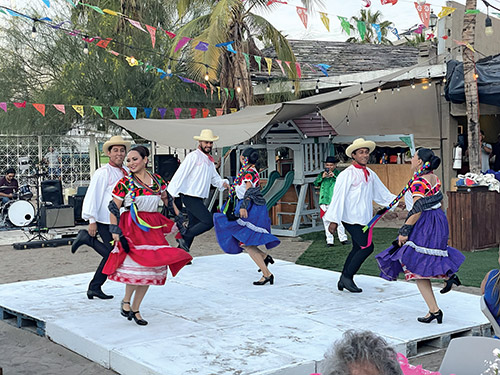
Cash is king in Mexico: Outside of the major cities you’ll need cash in Mexico, and quite a lot of it for restaurants, supplies, water taxis, and even to tip the children on shore who help to launch your dinghy. The stops along the Baja route were generally happy to take US currency, but we found that credit cards were not widely accepted; and even in medium size towns there can be no ATM or bank. The Baja Ha-Ha guide suggested that we bring about $20 in small bills per person, and I think we all wished that we’d had at least ten times that amount.
We’ve felt warmly welcomed: Despite some common preconceptions, I’ve found Mexico to be relatively crime-free and have felt safe here even during the period of cartel demonstrations in February. Yes, it’s necessary to be street-smart anywhere in the world, and particularly where there’s a fair amount of income inequality, and we have heard of the odd dinghy going missing or an unoccupied boat being burgled. Even so, I can’t imagine it’s worse here than in any other busy area in North America.
Also, Mexico is so much more than a place in which to be cautious. Apart from the stunning beauty of the land and wildlife, the Mexican people that we have encountered have been welcoming, polite, curious, gregarious, and joyfully proud of their home and culture. Speaking a little Spanish, even a “buenas tardes” to folks you pass on the street, brings a delighted response. One highlight in La Paz was being invited over to the table of a couple on business from Sinaloa, where we were treated to many rounds of fine tequila and a glowing description of the fine culture and sport fishing to be had around Mazatlan.
I’m now trying to gain some fluency in the language and looking forward to getting to know this rich culture and part of the world so much better. Possessing or working toward such linguistic proficiency in advance would benefit any Mexico-bound cruiser.
Reflecting on where we started and how far we’ve come from the chilly, familiar waters of the Salish Sea in the last year, I’m proud of our level of preparation and all we’ve been able to experience and accomplish on this big journey thus far. As any voyager will tell you, excellent preparation doesn’t mean there won’t be a lot to learn as you head offshore on your own boat for the first time. Thankfully, this learning has been rewarding and inspires us to pursue farther-afield adventures together aboard Capricorn.
A former Seattle resident, Simon Lilley became a full-time cruiser with his wife Lisa in August 2025. They are currently cruising Pacific Mexico on their 1999 Hallberg-Rassy 42F Capricorn, and you can follow their adventures at www.svcapricorn.com.