A Friendly Neighbor Sparks a Fondness for Fishing and More Days on the Water
Ever since we began boating on the Salish Sea, we have encountered crowds of boats in certain seasons and locations chasing salmon. We love salmon, both as a scrumptious meal and for the huge role they play in our native environment and Pacific Northwest culture.
Growing up here, I know many people who absolutely live for fishing and spend a lot of their time and resources pursuing this activity, and even a few who get a little wild-eyed and seem slightly crazy if you ask them, “How’s fishing been?”
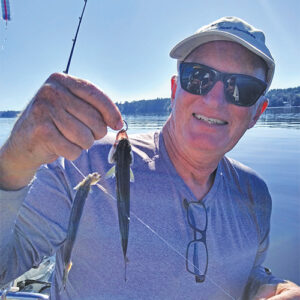
As a kid, my buddies and I used to ride our bikes down to the public fishing pier in Des Moines to catch flounders and sculpins. We wished that we could get a salmon on the line, but of course we never did. I’ve been a casual fisherman most of my life and never got very serious about getting better at it. I tried trolling behind our sailboats a few times with zero success. Plus, cruising on small boats is crowded in the first place and bringing fishing gear along takes up valuable space on board. To top it off, I imagined that if I were to catch a fish things would become messy very quickly, so I haven’t put much effort into the activity.
Recently this has changed, representing yet another “gear shift” in my life on the water. When we purchased our C-Dory 22 cruiser, Sea Lab, from her third owner in Oregon—as with most pre-owned boats—it came with boxes of all kinds of stuff, including two Scotty downriggers. I actually offered them to my brother-in-law, but they were manual downriggers and he wanted electric ones. Oh well, into the basement they went, where they gathered dust for four years.
Then we moved our homeport to Fair Harbor Marina in Grapeview on Case Inlet and my fishing interest needle shifted. I met a neighbor right away who stopped by because he had noticed Sea Lab on the trailer at our house and wanted to know if I liked fishing. His name was Mark and his next question was, “You want to go out right now?” I said sure, and we met at his house down the street in a half-hour and dinghied out to his 17-foot fishing boat tied to the mooring ball in front of his place. We motored off into Pickering Passage then out into Case Inlet. It turns out he was a retired fisheries biologist whose absolute favorite activity is fishing, and he would be happy to teach me how to go about it. How lucky is that?
One thing about fishing these waters is that it is not really intuitive or straight forward, at least not for me. There is a dizzying array of equipment and regulations that are daunting to wade through, so having a fishing mentor nearby is a big help.
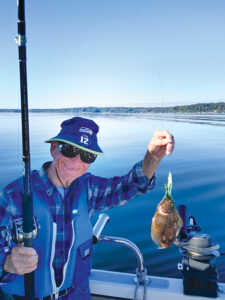
Mark taught me how to use the downriggers and how to tie up flashers and dodgers, herring and hoochies, and lots of other little gizmos and tricks. Before I knew it, I hooked what I now know as a resident Chinook. It was a little too small to keep but it was exciting! I’m not quite sure who hooked who.
After a few more trips out with Mark, I dug those downriggers out of the basement and dusted them off, clicked them into the mounts on Sea Lab and headed out to see if I could remember what to do. Mark had all the gear on his boat, so I didn’t have to think about what to use or where it came from, we just went out and started fishing right away. I had a couple poles and a mixed assortment of tackle that I had accumulated over the years, varying from things still in packages to things caked in rust. I decided maybe a trip to Bass Pro Shop would be interesting.
Upon my arrival in the fishing department, I tried to imagine going out fishing with Mark and what we use to catch salmon. If I didn’t have a pretty good idea about what to start with, I probably would have given up and gone home. Holy buckets, there is a lot of fishing gear! My next surprise came at the cash register. Those downrigger balls are expensive, and all the tiny hardware adds up to real money. Well, I thought, if you want to play the game you have to pay the dues, so I whipped out my card and paid the man.
When all the planets aligned, figuratively speaking, I called my trusty friends Al and Rob and we headed out to see if we could make it work. We tied everything together and got it in the water and started dragging it around in the places Mark had told me were good. We caught several little fish, but not the salmon we were looking for. There are lots of sea-run cutthroat trout in the waters of the South Sound and they were fairly aggressive toward what we were offering. Nice fish and probably good for dinner, but they have been catch-and-release only for a long time so we let them go.
These are interesting and beautiful fish, and they became a protected species in the 1990s. Everything I can find on the internet about them indicates they have made a tremendous recovery since being listed. Until a few years ago I did not know there were trout other than steelhead that migrated from their freshwater home stream to saltwater and then went back to spawn, but these fish do that. Unlike steelhead, they stay close to home in the saltwater and don’t head all the way out to the ocean.
Another thing that I learned since Mark has been my fishing mentor is that there is a population of salmon known as resident Chinook whose life-cycle is similar to the sea-run cutthroat. They begin in the streams and migrate into the Salish Sea, but apparently there is enough forage for them that they don’t travel out the Strait of Juan de Fuca and into the Pacific, but stay in the southern reaches of the South Sound. This has led to a significant population of Chinook salmon there that has resulted in the Washington Department of Fish and Wildlife establishing a year-round open season for this particular fish, which are sometimes known as “Black Mouth” because of their obvious black gumline. In the summer months, they are keepers at 20-inches and, in the winter months, the keeper size moves up to 22-inches. The only area where this year-round season for Chinook fishing exists is in area 13, which is all the Salish Sea south of the Tacoma Narrows bridge.
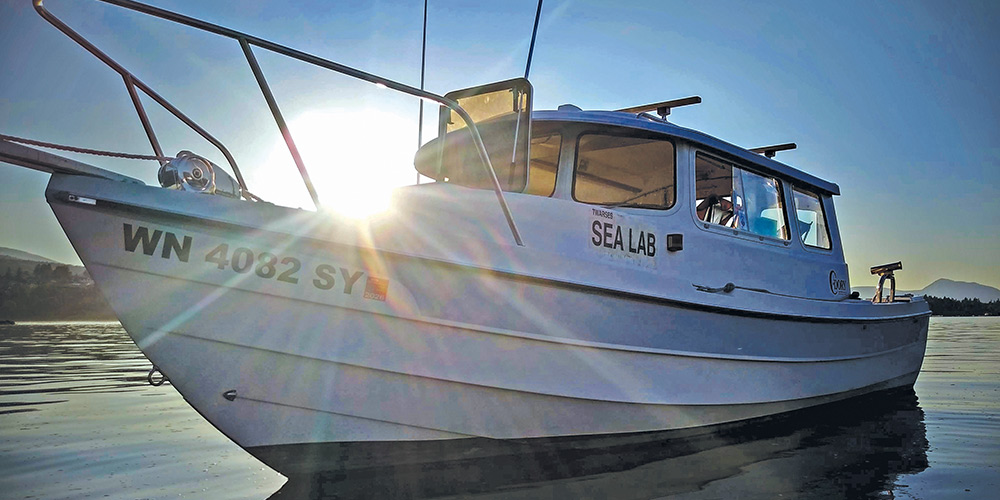
My first steps into the world of fishing have been as rewarding as the learning curve is steep. It makes me a happy fisherman to know that I have another good reason to leave Sea Lab in the water and available to use more days of the year.
This has been a good year on Sea Lab. We’ve been aboard 40 days so far and, because of my newly rekindled interest resulting from a new friend, we’ll have several more days before the end of the year, and that feels pretty darn good.
Dennis, Tekla, and Tim Tim the sailor dog recently changed their home cruising waters from Tacoma to Case Inlet.