Every year, Anacortes Yacht Club’s Northern Century Race throws down a challenge like no other, and this year certainly delivered on its promise.
Northern Century is an event where the wind might disappear, the currents take on a life of their own, and the only thing you can rely on is the thrill of the chase. The 100 mile course consists of a start/finish line in Anacortes, and two marks—near Point Roberts and Hein Bank—with the route to and from as well as rounding order left up to each competitor. There’s also a 50-mile option that goes to and from Alden Bank with similarly varied routing options.
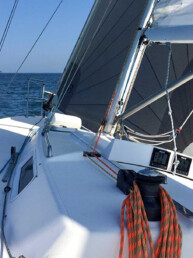
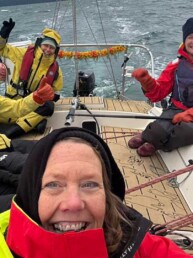
After my 12-year break from Northern Century—following an overall doublehanded win with my brother, Angus, and the unforgettable moment of catching a salmon mid-race—I knew it was time to jump back in. So, I joined my good friend Nige Oswald on his new F32R trimaran Kelona, joined by a fun-loving crew of 5o5 sailors: Mike Holt and Miles Johannessen. Together, we were ready to take on the San Juan Islands’ wild currents and fickle breeze.
This year, the race took a turn… literally and figuratively. No longer a Friday night start, Northern Century now kicked off at noon on Saturday of Labor Day weekend, with the finish potentially stretching into the holiday on Monday. The forecast was a mixed bag: sunny, light winds, and plenty of transitions to keep things interesting. It would be a dance of currents, brief puffs, and tactics, with hopes of rounding Point Bob and slipping past Patos Island in the nick of time. But as the saying goes, “The best-laid plans of mice and men…”
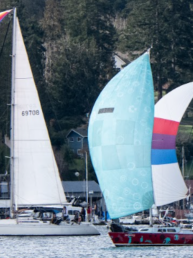
The race fleet of 16 boats prepared off Cap Sante in a light westerly. Our main competition for line honors were the Riptide 41 Blue and the TP 52 Mist, but our fleet presented a tough challenge for the overall win. Noon arrived, the gun fired, and we were off, flying our screecher in 6-8 knots of breeze, reaching boat speeds of 11 knots as we headed toward the east side Guemes Island. The rest of the fleet followed, except for F25C Makika, which went for a flyer, heading out into Guemes Channel, likely aiming for Bellingham Channel.
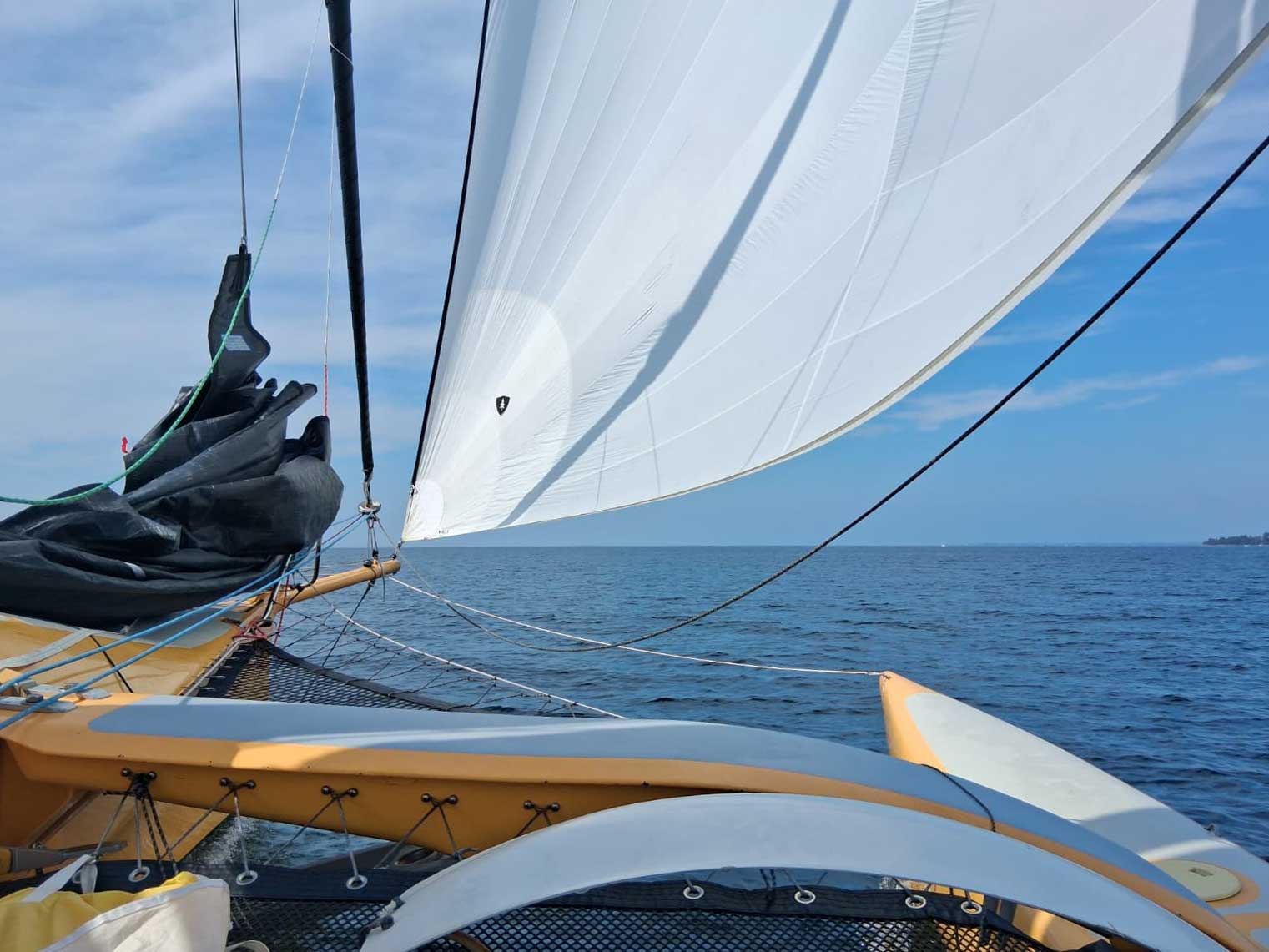
As we passed between Huckleberry and Saddlebag Islands, the great equalizer—no wind and adverse current—consolidated the fleet. We played the shifts on the easterly side with Blue and Mist, but Hobie 33 TC, and Evelyn 32 Ratfish, and a few smaller boats worked their way up the Guemes shore. They were making progress, so we used some carpet to reconnect with the leaders. As pressure began to build, we legged out and took the lead again. With a northerly breeze, we headed east of Vendovi Island and found building pressure on the Lummi shore—enough to hoist our jib for the first time. We made a few tacks up the beach in 8 knots of breeze, working towards the north end of Sinclair, and placing our bet on what seemed to be a westerly breeze coming from Obstruction Pass and Orcas Island.
At this point, Mist and Blue could be seen with their kites up in light air along the Sinclair shore, while, in the distance, we could see Makika emerging from Bellingham Channel under kite. We had a quick drift in the transition from the northerly to the westerly breeze, then set our screecher again, heading for Point Roberts. Soon, we transitioned to a kite off Point Lawrence, but jibed away from Clark Island and Barnes Point toward Cherry Point and the northern tip of Lummi Island. It was light and shifty, with another jibe toward our mark. As the breeze built, we were zooming along at 13 knots but, of course, wind is fleeting in this race. The carpet vanished near Alden Bank, and we watched as our competitors started to close the gap.

Waiting for the next breeze, we played a light northerly and made our way toward the banks. We got a shift and headed north again, but Mist was closing in. Still, we found some new breeze and started making progress. By now, there was barely any wind, but we still had 8 knots of boat speed. As evening descended and the mark loomed closer, we decided to enjoy our provisions—Chipotle burritos—before rounding the mark and heading south. Just before the mark, the wind shifted southwest, and we had a quick kite run for the last couple of miles.
We rounded the mark around 18:30, still in a southwesterly wind of about 6-8 knots. Not long after, we tacked and headed toward Patos Island. Mist was very close at this point, about 8 minutes behind, with Blue around 12 minutes back, and Makika had made a comeback, trailing by about 16 minutes. The race was still on. Mist was flying on starboard tack, holding their course and working south, while we made several tacks to the west, looking for better current and breeze. Mist managed to get ahead and pass us by Patos, but we were close and tacked toward Saturna.
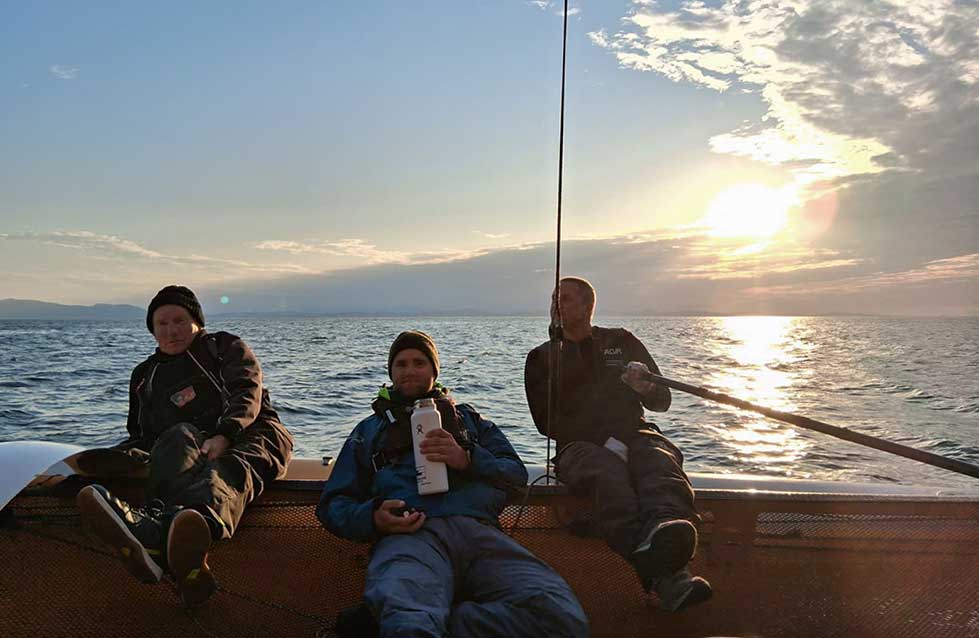
The ebb was starting, the night was falling fast, and the breeze was evaporating. Mist held the lead until we neared the west side of Waldron Island. We made some good guesses and snuck past them. In the far north, flashes of lightning were visible toward Nanaimo, but no thunder followed. We debated whether to take the current and light breeze down San Juan Channel, but all the weather buoys still showed a westerly in the Straits, so we decided to head for the mark before the next tide shift. A new breeze built, and we made good time toward Turn Point.
At Turn Point, there was another restart, with Mist and Blue coming out of nowhere after getting stuck earlier. There was a lot of ship traffic, and plenty of communication in the fleet as we all drifted with the ebb, catching little zephyrs of wind. Blue snuck ahead for a time closer to Canada, but we found some breeze off San Juan Island and started making progress again. By the time we reached Kelp Reef, though, we were all drifting at an equal speed of 2.5 knots with the ebb. We tried to sail, but all we could do was drift together.
Finally, we found a little breeze from the west and began to make way, and by 02:00 the pressure was building. We reached hard in what we thought was the new pressure, expecting to be 30 minutes out from Hein Bank, but of course, the wind died again. We bobbed along in tidal chop and light westerly air. We finally rounded Hein Bank around 04:00 and set the kite on a starboard jibe. We debated heading farther south in search of breeze, but we were more than 90 degrees off course, so it was hard to turn away from the finish line.
As we worked our way east in the dark, we could hear the sound of a humpback whale breathing nearby and, to the west, flashes of lightning illuminated the sky over Victoria.
The morning was calm, and the first light of dawn was just beginning to show as we crep toward Davidson Rock at “isopod speeds,” doing everything we could to keep the boat moving. The wind kept shifting from northerly to westerly to easterly. As the sun rose, we could see Blue coming toward us from the southwest with pressure. The line of pressure was approaching, but it wasn’t fast enough for us to stay ahead.
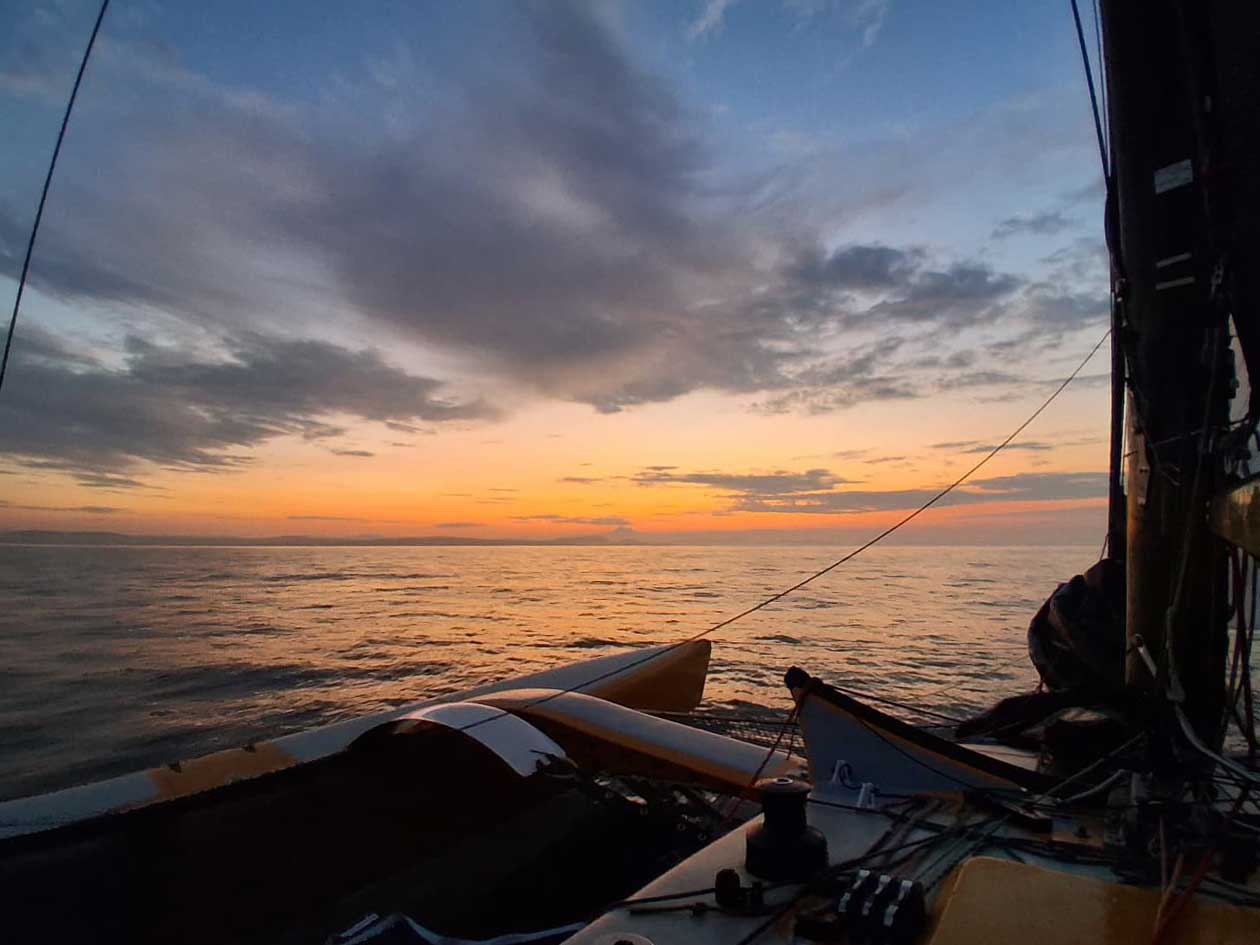
Blue caught up near the southern shore of Lopez Island, and we had a drifting battle toward Davidson Rock, where another big transition awaited. It was light, with an easterly to westerly shift and a bit of southerly breeze, all while the current continued to push us along. Blue was able to sneak ahead, and we fought to get back into the new southerly pressure. With no passing lane available, we stayed farther east and continued our fight to regain our lead, but it seemed like the table was set.
And so it was. After sailing 107 miles at an average speed of 4.5 knots, there we were, grinding out the last miles, exhausted, elated, and a little bit delirious. After hours of drifting, dodging shifts, and reading the currents like we were trying to decipher a secret code, the end was finally in sight. Blue had pulled ahead, and we had to tip our hats to them; they were sailing beautifully. But that’s the thing about the Northern Century: it’s never over until it’s over. We fought for every inch, dragging our boat toward the finish with one last burst of energy. The new finish line off Burrows Island Lighthouse had never looked so sweet, and as Blue crossed the line under A2, we trailed by just 5 minutes. Mist came in 30 minutes behind us, a true testament to the nail-biting nature of this race.
Huge congratulations to TC and crew for their overall win on corrected time—what a fantastic performance. And a big shout-out to everyone who stuck with it, from the relentless light airs to the heart-pounding transitions. Northern Century is always an adventure, always a challenge, and never short of beautiful moments on the water. That said, if there’s one thing we all wished for this year, it was a pedal drive, just so we could beat the plankton in the dead zones. Next year, don’t be surprised if we show up with a bicycle strapped to Kelona’s transom. If R2AK and WA360 can do it, so can we—though it’s the Northern Century, after all, so we’ll probably still lose to the plankton.
Full results here.