The San Juan and Gulf islands. Alaska. Mexico. Colombia. Curaçao. The British Virgin Islands. Sint Maarten. There’s a single-line that connects all of these places throughout our family’s cruising odyssey. They’re all locales where we’ve spent a significant amount of time rather than hopping through and waving goodbye, and the reasons for doing so vary. Now, we look back and appreciate the value, challenge, and connection that—planned or not—each of these places has brought about for us.
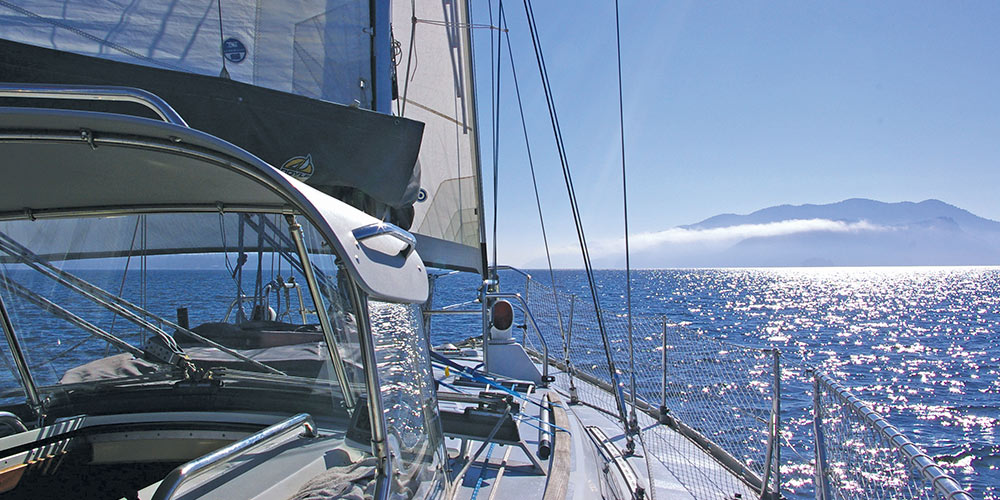
In 2014, when our family set off from D-Dock at Seattle’s Shilshole Bay Marina and started cruising on our Grand Soleil 39, Yahtzee, we had an inkling of a plan, but no real way of knowing how long we would be out or exactly where we would go. What we’ve learned throughout our travels from the Pacific Northwest to our current location in Sint Maarten, Dutch West Indies, is that you have to be able to adjust on the fly, hit pause, and accept change for things like boat problems, variation of seasons, personal issues, travel off the boat, financial reasons, and even the unexpectedness of a global pandemic. It doesn’t matter if your intended cruise is one, two, or three years, or open-ended, at some point, challenges and major decisions will come your way.
Cruising may seem synonymous with near constant travel, but our years underway have been punctuated by a number of relatively long stops. Whether or not we saw them coming, they have all been truly special parts of our journey. Here’s how our family has navigated some of the major life choices, ordeals, adventures, and escapades along the way, and what finding those deeper connections have meant to us.
GAINING EXPERIENCE
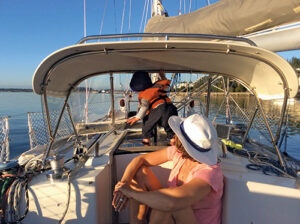
It was early September when we cut our docklines to head out cruising, with a vague plan to head up to the San Juan Islands, Anacortes, and Bellingham area to cruise for the winter. Our firstborn son, Porter, was just over a year old and my wife, Jill, was pregnant with our second, who was due at the end of December. We set off with a “let’s get out there and see what happens” mentality and the attitude that, if we needed to stop or if something wasn’t working for us, we’d reassess and move forward accordingly. We weren’t going to force it.
At this point we’d already lived aboard Yahtzee for two years and had taken every opportunity we could to daysail, race, and embark on short cruises from the South Sound to the San Juan Islands. Also, Jill and I had sailing and cruising experience in other parts of the world, so we had a good idea of what we were getting ourselves into. That said, we knew we needed to take it slow at first in order to gain experience as a young cruising family traveling full-time through groups of islands that we’d only been to once before for ten days.
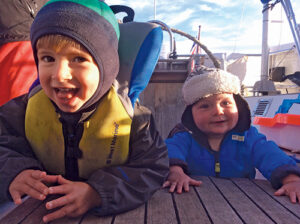
Our second son, Magnus, joined us in Bellingham on December 27, 2014 and we were soon back out into the islands where we cut our teeth cruising through the winter while getting a simultaneous crash-course in parenting a newborn and a toddler. Looking back on it now, it seemed like a somewhat audacious plan that may have set us up for failure. But we took it slow, didn’t move very far or very fast, and settled in to learn the rhythms of life together. We bonded as a family, but also with the natural beauty of the islands and the people who accepted and helped us. We spent many months cruising waters where some boaters might think they only “need” a few days, and we didn’t shy away from returning to favorite spots many times or staying for long stretches in seemingly unremarkable locales. And we loved it.
It was a learning experience that would set the stage for a cruising philosophy that we still live by over a decade later: Move at a pace that suits us and our needs, be open to change, don’t set a rigid or unrealistic schedule, take adversity as it comes.
FILLING THE KITTY
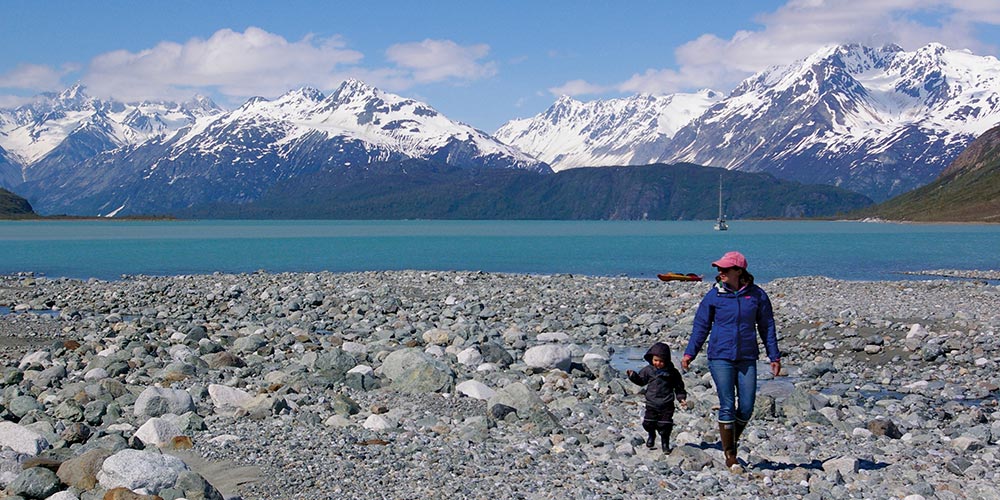
After spending two winters in the San Juan and Gulf islands, and summers cruising north into Desolation Sound and around Vancouver Island, we were ready to head toward Alaska. In late April 2017, we sailed across the border and into Ketchikan and spent several glorious months cruising Southeast Alaska. In July we wanted to see more and pushed onward to Kodiak Island, the Kenai Peninsula, and Prince William Sound.
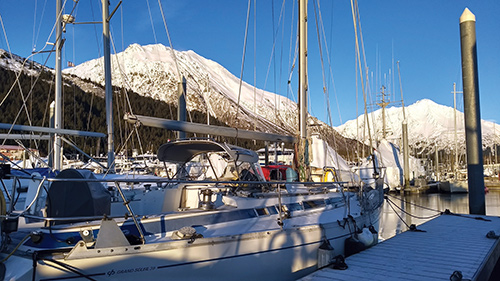
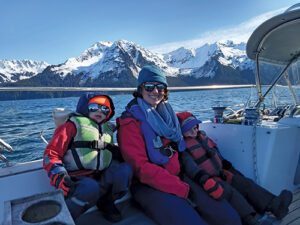
By August we were captivated by what we had experienced of Alaska, Jill’s home state, and thought that we might stay longer and that she could find a job. During the years prior, I had worked remotely to keep us going, and by this point we firmly knew that long-term cruising was ahead of us. To help make going farther more attainable and to add some necessary upgrades to Yahtzee, Jill accepted a job in Seward, we got a slip in the harbor, and settled into a new routine. Also, after taking a few years off to raise our boys, she was looking forward to working again, even for a short time.
Seward turned out to be everything we’d wanted and more. We completed much of the work that we’d planned to do on the boat, made many sailing and non-sailing friends in the process, and lived in a stunningly beautiful place. It was a great community to plug into, and also offered local cruising opportunities that kept our skills sharp and heightened our sense of wanting to continue the sailing lifestyle. For avowed full-time cruisers, a nearly two-year stop with a permanent slip might seem like an eternity. But in reflecting on it today, it doesn’t seem like we necessarily stopped cruising in Seward, we just had a different cruising approach that was preparing us to go farther.
In May 2019, it was with many bittersweet goodbyes that we shoved off once again and headed for Southeast Alaska, California, Mexico, and beyond. Fortunately, in doing so, we were accompanied by a buddy boat with kids who we are still wonderful friends with today—proof that cruising truly makes fast and lasting relationships that can transcend time and place.
SEASONAL REALITIES AND TRAVEL
In the high latitudes of Alaska, winter was the time to sit. When we got to the tropics, hurricane season became the pause-point. Some cruisers hunker down on their boats for hurricane season, but not many. Our insurance won’t cover Yahtzee if it is in the water and damaged during a named storm, so every year we’ve found safe places to stash her.
For the first three seasons, our hurricane haulouts were in Mexico and, in each instance, we connected with fellow cruisers who were going through the same motions, and with the helpful staffs at boatyards and marinas. After passing through the Panama Canal, we’ve added Colombia, Curaçao, the British Virgin Islands, and Sint Maarten to that list, and each has been rewarding in their own ways.
With the boat safely put away, we learned very quickly that there’s a world around us to explore. Twice in Chiapas, Mexico, we rented a car and explored the mountains and ancient ruins of the southern part of the country and the border area with Guatemala. We did so with two other buddy boats and the travel together, while not always easy, was ultimately fun and rewarding for all the parents and kids. The stories from those inland excursions still get told and laughed at around bonfires and at beach bars. Priceless memories.
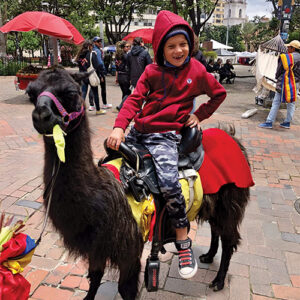
ride in Colombia.
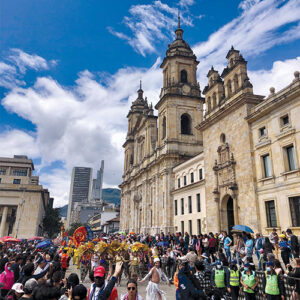
In Colombia, we took time away from the boat to experience the country more intimately than just hopping along the coast. We lived in an apartment in Cartagena for a month while new interior cushions were being made for Yahtzee, and then spent six weeks living in the vibrant and fascinating city of Medellín. Taking time away from the boat and having these cultural encounters was illuminating for our entire family. We began to see the recurring theme that the rewarding experiences this life affords aren’t purely dependent on us moving the boat from place to place uber frequently. And when it was time to get back to Yahtzee and set out cruising again, we were as eager as ever.
Along with exploring other countries, taking a pause for hurricane seasons has allowed us to stay connected with our family back in the United States. Each summer we take some time to travel back to see parents, grandparents, aunts and uncles, nieces and nephews, cousins, and friends. Part of the reason we chose to cruise the Caribbean is so we can be relatively close in order to maintain and nourish those important relationships. After all, they’ve been our biggest cheerleaders in living the cruising life.
HANDLING THE UNFORESEEN
While some stops are planned, others definitely are not. When the Covid pandemic hit in 2020 and everything came to a screeching halt, we were initially caught in a state of deep uncertainty. That March, we were in Mazatlán, Mexico, at a government-run marina to top up on provisions and do laundry. Suddenly, everything was closing down around us and we feared that if the marina and harbor were shut down, we’d be stuck. So, we quickened our pace and had a decision to make: Where do we go from here?
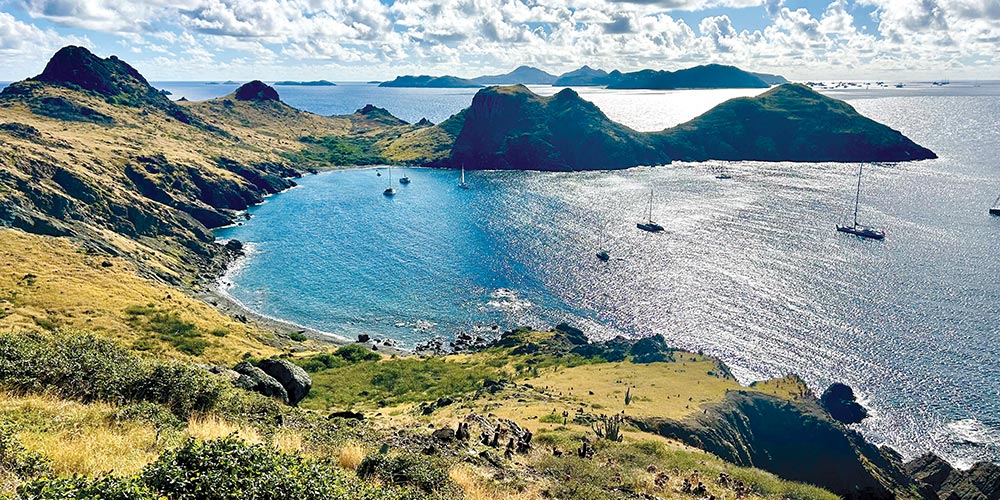
Talking to several cruisers on different parts of the Pacific Coast who were also scrambling in the face of changing rules, regulations, and lockdowns, we decided to join two buddy boats who also had kids, one of whom we’d cruised with previously in the Pacific Northwest. The three of us decided to hunker down in a section of coast south of Banderas Bay called Bahía Chamela—an area roughly 8 miles by 5 miles—somewhere we had visited previously and hoped would work for a potentially lengthy stay.
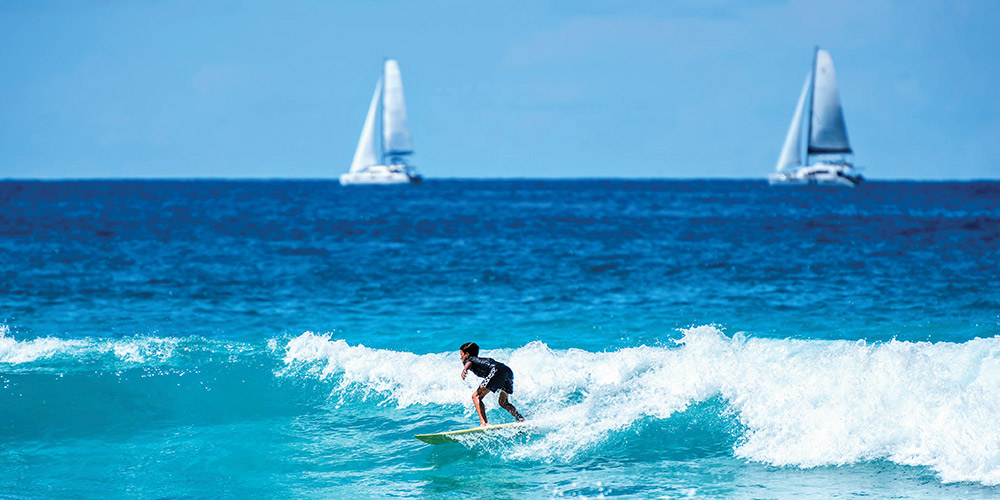
At that point, we’d been consistently on the move since leaving Seward, rarely staying in one place for long. We gambled that sparsely-populated Chamela would be a suitable place for a cruising quarantine home, and hit the brakes to wait out whatever happened with the pandemic. Not moving very far and living at anchor, our life slowed considerably. Week after week, month after month, we fell into simple routines: cooking, baking, reading, writing, playing games, surfing, fishing, swimming, and helping the boys with their schoolwork.
The abrupt three-plus-month pause in such a remote place was an unexpected change, but sailing fewer miles allowed us to gain a new perspective on cruising. We bonded with our buddy boats (nearly the only people we were allowed to see), explored uninhabited islands, and met a sweet local couple who helped us all get food and fuel. Certainly, it wasn’t what we planned, but we made the best of it and remember it fondly.
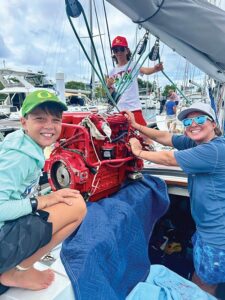
Another unforeseen challenge in cruising is boat problems. Ours came in the form of a transmission failure, which prompted a lengthy stay in Curaçao and ultimately left us with fouled fuel tanks and engine trouble in the British Virgin Islands. This time, though, we weren’t at the mercy of government rules and regulations; it was with getting parts, finding mechanics, and then actually having the work done. Frustration mounted in both instances as time wore on and marina moorage bills piled up.
Yet, there was once again a silver lining. We made friends and settled into two welcoming Caribbean islands that we now count as places we would gladly return to anytime. Best of all, our boys made buddies quickly, and it was comforting to hear a knock on our hull and then watch them scramble off the boat with a soccer ball or fishing rods in hand, only to return when the marina lights turned on. Such experiences wouldn’t have happened for them had we been on the move, which is a reminder that no matter what adversity we’re going through, there’s usually something positive that we can sail away with.
LIFE STILL HAPPENS
Along with the unforeseen, we’ve also come to adapt to the times when we know we need to pause for work obligations or for personal reasons. Jill and I both work remotely and there are instances when one of us needs to be gone for up to two or three weeks at a time. These stops are scheduled, but the trick is finding the right place for those on the boat to be that is cost effective and safe. Last year, Jill flew back to Alaska to work for three weeks, and the boys and I holed up in Antigua in one of our favorite anchorages. There were plenty of things to do nearby to keep us busy and, though we missed having her, we had a great time exploring ashore.
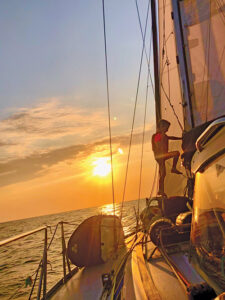
before a night passage in Central America.
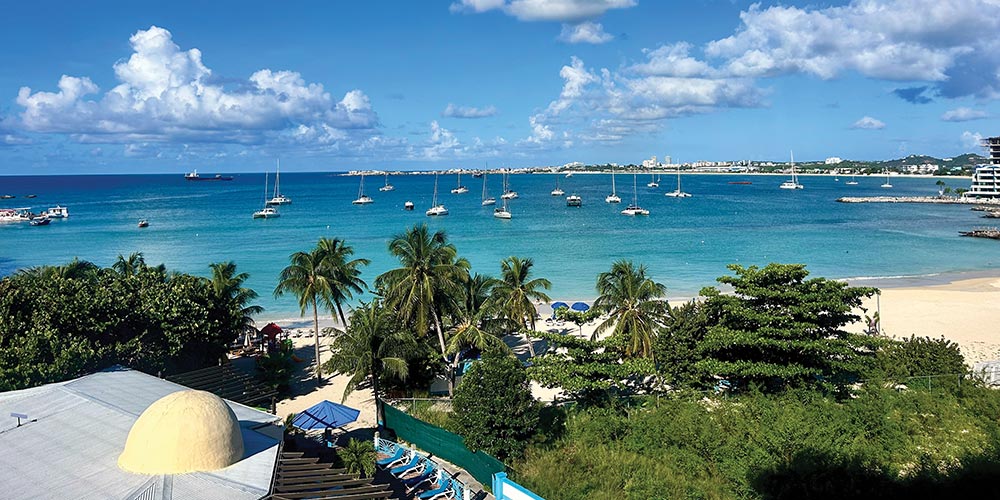
Our latest pause has been on the medical side. Along the way, we’ve received dental care in nearly every country we’ve visited, which has mostly been routine. But it’s been no secret to us that, at some point both boys would need orthodontic care and braces. Since you can’t just stop to have preliminary work done and then leave, we needed to find an orthodontist that would work with us and our lifestyle. In doing so, we had consultations on the French and Dutch side of Saint Martin/Sint Maarten and in Antigua. We liked the Dutch-side orthodontist best and found that Sint Maarten is an ideal place for us to live at anchor while also being able to cruise locally around the island, and to other nearby islands like St. Barth and Anguilla.
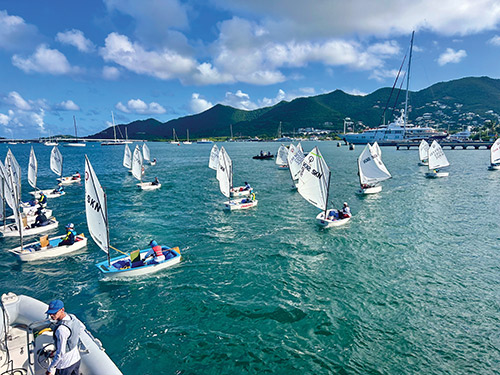
It’s a best of both worlds solution and there are silver linings to this stop as well. The boys are receiving excellent and affordable care, we’ve all made friends, and they are thriving on the Sint Maarten Yacht Club racing team—loving practices, their coaches and teammates, and the many regattas that happen here. This isn’t a forever stop, but we said from the beginning that if any of us need to pause for something like this, there is no question that we would do it. From here, who knows where the winds of change will take us.
DO YOUR THING
For new cruisers out there or for those who are planning on taking the leap, my best advice is to do it your way. Yes, you can and should read and learn from stories in books, sailing magazines, and online, and be inspired by countless YouTubers, but don’t get so far into the weeds that you think it absolutely has to be done a certain way. It doesn’t. Do it your way. Cut those dock lines with the assurance that the way you envision your cruising adventure will evolve and even be derailed by a broad array of choices and circumstances.
As long as you’re staying safe, having fun, and following your dream of getting out there, nobody actually cares what boat you’re on, how many miles you sail, or how many places you drop your anchor. There is no one in charge of issuing or revoking your “cruiser card”. Stay true to yourself and make it work however you can. When you do that, the best parts of cruising will reveal themselves and the rewards will be long lasting. See you out here!
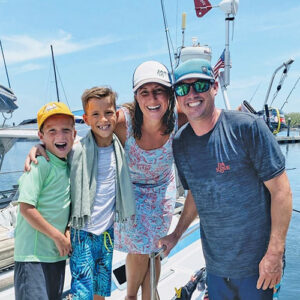
Andy Cross is the editor of 48° North. After years cruising the Pacific Northwest and Alaska with his family aboard their Grand Soleil 39, Yahtzee, they sailed south and are currently in the islands of the Eastern Caribbean.