We’ve all heard the saying that when it comes to cruising there is nothing more dangerous than being on a schedule. The temptation to adopt one is rampant and relentless. Rendezvousing with friends and family in exotic ports, arriving at anchor in time for a business call, or maintaining a full calendar of social obligations within the cruising fleet. There’s no doubt about it, schedules can be dangerous and counterproductive. Before you take off cruising, it feels fun and easy to daydream about all the places you’ll visit, drawing up draft itineraries and scrupulous plans to pack it all in so you don’t miss a thing. It’s especially tricky here in the Pacific Northwest, which offers incredible cruising grounds, and its long dark winters give us ample time to anticipate and dream about exploring them.
But once you take off cruising, whether it be for weeks or for years, it can be tempting to linger a little longer in some of those wonderfully serene places. Sometimes weather or ocean conditions will even mandate that you do. Or at least you should. Before you know it, the comfortable couple of nights you carefully crafted into your dream cruise itinerary turn into a week with all the sights, activities, and people you meet. Who wants to leave early when there is still so much to experience, and even more on the horizon?
Attempting to maintain too strict of a schedule can mean departing or sailing in suboptimal conditions, which risks safe passage of both vessel and crew, not to mention drains the joy out of cruising. Failing to reef when you first think of it and eschewing comfortable sleeping conditions at night in favor of chasing VMG come to mind. It’s also never fun to feel obligated to flip on the engine rather than enjoy working the flippant zephyrs on a bluebird light air sailing day for the sake of meeting a deadline. Prudent seamanship dictates making judgement calls aimed at preserving the well-being of the boat and crew, not the homeostasis of the calendar. Besides, most of us love cruising because it gives us a chance to slow down, not speed up. We’re out here because we want to savor experiences and relationships, unplug and reconnect with the natural world, and allow our days to be dictated (in a good way) by the wind and waves rather than the frenetic pace of land life.
You can probably guess the punchline here: that a schedule is totally not necessary and just barely makes the cut for the nice list with numerous caveats. But what if we told you there actually is a stage in preparing to go cruising where having dates and deadlines is, in fact, very necessary?
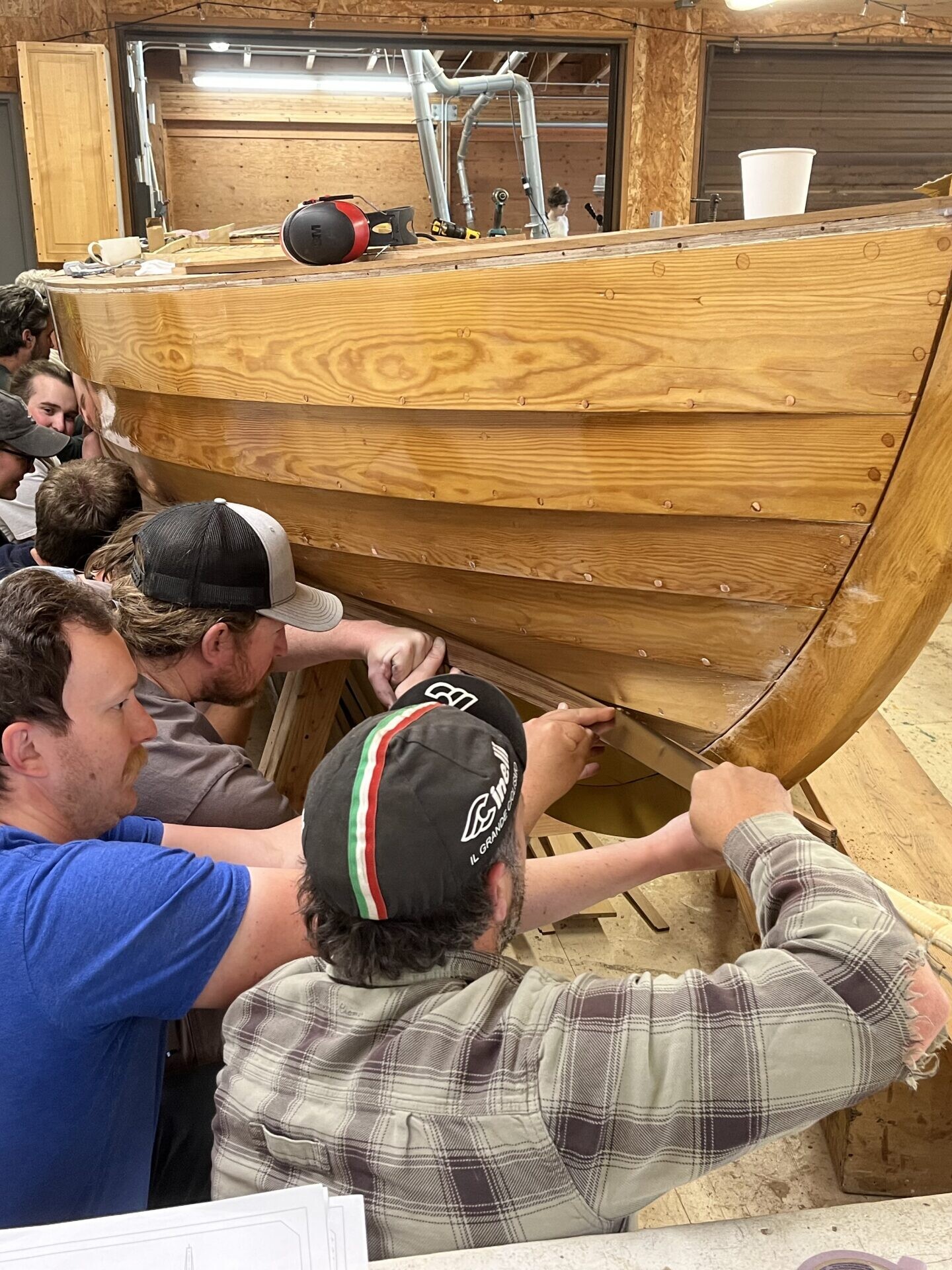
It has to do with the process of refitting and outfitting your boat. The term “refit” refers to the process of updating, repairing, or rebuilding parts of a boat’s systems. This is different from simple repairs, which focus on fixing broken components, or routine maintenance such as engine fluid changes. A refit typically involves a more comprehensive overhaul, addressing aging systems, structural integrity, and the boat’s livability for long-term cruising. A refit ensures that critical systems like the engine, rigging, and electrical systems are in top condition. For example, replacing a tired engine or overhauling an aging fuel system can prevent potentially catastrophic failures during a voyage. And while overly strict schedules typically don’t make sense when you’re out cruising, strategic dates and deadlines that help you complete your refit and achieve your cruising goals absolutely do.

The deadline should be for completing refit and outfitting tasks. This will help prevent leaving too many big projects until the last minute and risk not getting them done at all, which in many cases will delay, curtail, or cancel your cruise. Your go-date is when you will set sail. Weather dependent, of course, but this is the date that will keep you motivated and on-track through the gray winter months when summer cruising feels infinitely far away, or through the years of preparation before taking off on a grand global cruise. Far too often we meet people whose go-date is “someday”, and “someday” usually doesn’t come for them. Big dreams, big goals, and big adventures demand and deserve more than “someday.” Setting a go-date will keep you honest and realistic about your timeline while helping you keep the promises you made to go play. To go explore. To go cruising. It will force you to continuously rebalance your refit priority list, not just in the context of monetary budget but also time, our most precious resource.
Dates and deadlines also help you plan and execute refit projects in a stepwise fashion and avoid the annual bottleneck of quality marine service technicians. Much of the marine service industry experiences a slowdown over the holidays and associated winter months. This lull can really work to your advantage if you plan your dates and deadlines right. Most technicians are happy to take on new work during their slow months and won’t feel rushed to get your project out the door so they can get the next last-minute job. It also means you’ll miss the spring rush on technicians who suddenly become swamped on the first sunny day in April when boaters seems to remember all of last season’s unfinished projects. Wait until then to inquire about scheduling and you may be shocked to hear that, within a matter of weeks, technicians have jobs booked until October.
If your plans include heading north for the summer, it’s best to be ready to leave earlier than risk having to hurry through the season. Or worse, miss it altogether. If you had a bunch of work done on your boat over the winter, be sure to factor in time to adequately sea trial your new or upgraded systems before you go. Your selected deadline should allow for the completion of all engine maintenance and service points, plus stockpiling the spare parts, fluids, and tools you will need along the way. Believe it or not, even engine oil can be extremely hard to find close to the start of the cruising season. And neither of the two alternatives—not doing the service or not taking the trip due to maintenance deficiencies—are ideal outcomes.

If this is the year you plan to make “The Big Left Turn” and follow the migrating birds and whales to warmer weather for the winter, allow ample time for a solid shakedown followed by a period to regroup and make adjustments before heading south. Even if you’ve done all your homework and dialed-in your systems precisely how you think you want them, there simply is no substitute for going out and using your boat to show you what you may have overlooked. July tends to be a great time for a shakedown cruise. Our favorite is circumnavigating Vancouver Island, which can comfortably be done in three to four weeks while leaving you plenty of time to fix what broke, modify what didn’t work, and enjoy the fleeting Pacific Northwest summer before a southbound go-date sometime in August or September.
Of course, the big question you must answer is when is enough enough? The refit list could go on forever if you aren’t careful, and it will never truly all be done. There’s always something new to discover, a surprise you’ll uncover in a bilge, a cabinet, or down the back of a settee cushion. We try to think of those as the exciting surprises of cruising. If you try to finish everything before departure you may never leave. In fact, it’s highly likely that you’ll stay dockside indefinitely unless you set your go-date, work back your refit deadline, and stay laser-focused on what truly is necessary to complete before your planned departure.
What you consider necessities will depend largely on your cruising plans and goals. Where are you going, for how long, what’s your cruising style? Will you spend most of your time at anchor, marina hop, make primarily short coastal passages, or cross oceans on the regular? Do you plan to follow an established cruising route or join a rally? Or will you eschew cruising guides in favor of pilot charts and strike out on your own, bound for the most remote, self-guided destinations? Your answers to all these questions will influence the extent to which you should plan to refit your boat and, therefore, how much time to allow. By and large, it’s important to keep in mind that you, in fact, need very little to go cruising and the highest priorities are ubiquitous regardless of your plans, goals, or boat. While everyone’s goals, boats, and refits are unique, we confidently recommend working the following five components into your budget and refit timeline with priority.
Ocean proof your boat. Keeping the water out should always be your number one priority and you’ve got to stay on top of it. The most expensive and invasive repairs usually involve unresolved water ingress. And who wants to sleep in a saltwater soaked bunk? Water related damages are huge contributors to depreciated values and destroyed hardware. Track down and immediately mitigate all signs of water intrusion you find, no matter how small. This will be an ongoing process. It took us four years to finally track down and stop all of the leaks on Sea Fox. This process will make the reward of a dry clean bilge truly the sweetest.
Bulletproof sails are the engines that keep you riding the wind mile after mile, so give them the attention they deserve. Inspect them carefully for signs of abrasion, chafe, or tears that may signal the need for reinforcing patches, improved chafe protection, or more efficient running rigging. Before setting off on a major cruise, consider investing in high-quality new sails and take the time to learn how to care for them so they last as long as possible. If you’re unsure how to evaluate their condition, hire a sailmaker for a professional assessment. Many sail lofts offer low-cost inspections that include a thorough review of both sail condition and your overall sail inventory in consideration of your cruising plans. If you’re debating whether to replace your sails now or wait until after another season, this can be a smart and informative step.
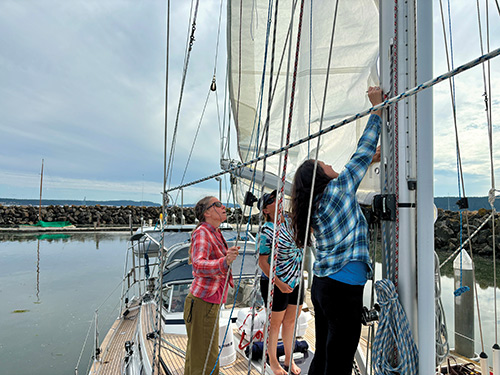
Rock solid rigging is what will keep your mast up and your sails full, among other often overlooked yet critical tasks. If your boat’s standing rigging is old or original, replace it. Insurance companies typically require new standing rigging at least every ten years, so consider that when evaluating your boat’s insurance needs. It’s wise to get a rig inspection and, ideally, learn how to conduct one yourself. A comprehensive rigging refit involves inspecting key components including the gooseneck, sheaves, vang, and masthead fittings while also evaluating potential upgrades like more efficient or electric winches, and refining fairlead and clutch layouts to ensure smooth, safe sail handling.
A simple, robust, redundant electrical system can be a far more powerful asset to you than an overly complex one. Truthfully, we can all reduce our overall energy consumption with just a few lifestyle and hardware modifications. Before adding solar panels or upgrading batteries, critically assess your power demands based on your cruising lifestyle. Reducing your need for inverted power, or alternating current (AC) loads is a great way to simplify your power demands and reduce overall system complexity. Focus on streamlining and updating your system to match your needs, particularly if your boat is older or has not been brought up to current marine electrical standards. Proper wiring and fusing, safe electrical distribution, and installing quality components are crucial for safe, enjoyable cruising.
Whether you’re sailing offshore or spending most of your time coastal cruising, self-steering quickly becomes one of your most valuable crew members. It’s rarely realistic for two or even three people to hand-steer for extended passages, and even day-long coastal runs are far more enjoyable when the helm can be shared with reliable equipment. As part of any refit, make sure to evaluate the condition and capability of the self-steering systems already aboard. You will rely on them heavily when you take off. Many coastal sailors rely primarily on electric autopilots, which can perform exceptionally well inshore, but a failure offshore could leave you hand-steering for days or even weeks. For more ambitious cruising plans to distant shores, consider a windvane for its reliability, energy conservation, and redundancy in steering.
As with all things boat and cruising related, flexibility is the glue that holds it altogether. Even if you’ve done your diligence in setting your refit deadline and go-date, delays due to parts or projects are often a reality. That’s ok. And even more reason to be forgiving in your departure planning rather than try to fill every single minute up until you sail away. This is all supposed to be fun, and if the project list is too daunting or the date you hope to take off stops making sense, that’s a sign to revisit your project list, rebalance your priorities, and let it be ok to leave some things undone. Tackle the necessities with tenacity and then perhaps spend some time acquiring parts and materials to stow away so you can complete lower priority projects once you take off. Oftentimes, tedious projects are a lot more fun when done at anchor somewhere scenic and peaceful anyway.
Start by prioritizing the most critical systems for safety and functionality. Once these basics are covered, you can consider upgrades that will improve comfort and livability as your dates, deadlines, and budget allow. But regardless of how you choose to incorporate schedules, deadlines, and dates into your refit and cruising preparations, the most important and necessary thing you can do is GO. Go play. Go use your boat. Go enjoy the fruits of your labors and the freedom of sailing into the blue and the solitude of the sea. And always remember: the boat will never be perfect, the projects will never all be done at the same time, but as long as you’ve prepared yourself with quality education and tools, you’ll be just fine. Now go have fun!

Gio and Julie of Pelagic Blue lead offshore sail training expeditions, flotillas, and teach cruising skills classes focused on preparing aspiring cruisers for safe, self-sufficient world cruising on their own boats. Details and sailing schedule at www.pelagicbluecruising.com.