In the spring of 2017, after returning from my year-and-a-half long sailing trip to South America, I set my sights on higher latitudes. I had sold everything to my name for what was supposed to be a decade-spanning sailing and filmmaking expedition around the world as part of a three-person crew, known as Sea Change. After not quite two years, an adventure cruising up the Amazon River, and a series of unfortunate events, I was back in Portland with little to my name; just a camera and an unfinished dream.
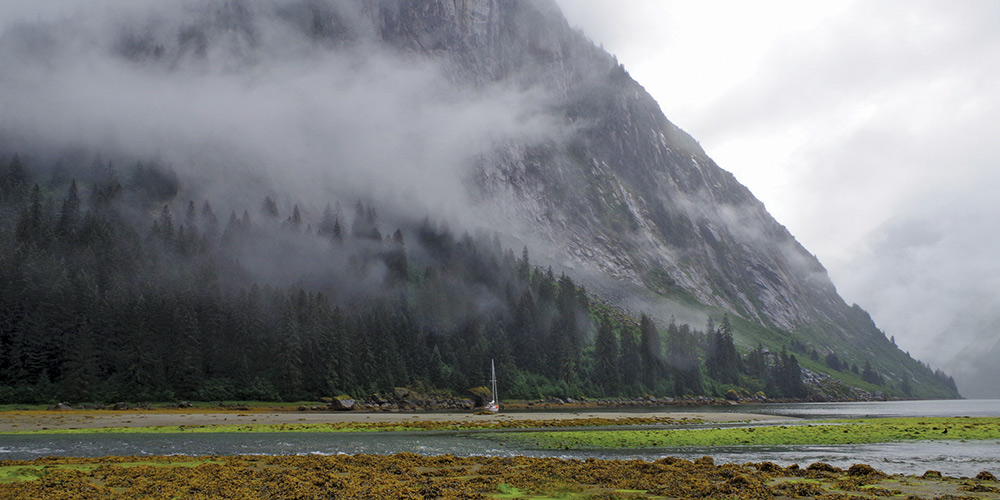
I moved back in with my mom for a few months while I figured out how to get back on my feet. One night while I was curled up on the air mattress, I browsed photos of sailboats in Alaska. I had a longtime dream to sail there and, as I scrolled through photos of vessels anchored in unreal locations, one shot stood out: a sailboat anchored in front of a giant looming granite wall, covered in fog. I wanted that. I set that photo as the background on my phone and made the decision right then to dedicate everything to achieving that goal. I craved that feeling of true rugged wilderness. A sense of remoteness that only the Alaskan frontier could provide. I wanted fjords and glaciers and wildlife.
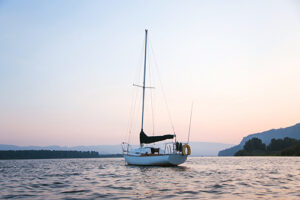
First, I needed a boat. My rationale seemed simple: I would buy a cheap boat with good bones that needed a little work that I could do by myself. I envisioned a boat small enough to trailer, so that I could do the work in my yard.
My dream felt closer than ever when I was lucky enough to land a job shooting featurette documentaries and save up a bit of money. I had also found a new living situation in a small camper on my friend’s land on the Long Beach Peninsula in Washington—a perfect place to work on the new boat.
Amidst this momentum, I made mistakes; the foremost of which was falling in love with the first boat I looked at. I didn’t know much about what to look for when buying a boat. I had few criteria: heavy displacement, proven design, and a forgiving platform from which I could continue to learn. A 25-foot Cape Dory—tied up at the end of a questionable dock in a remote part of the Columbia River—fit the bill. She was a handsome boat with a good reputation for safe passagemaking. More importantly, she was in my price range, about $4,000. All I knew was that standing at her helm felt good and I wanted her.
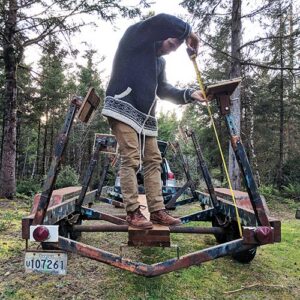
I spent a few months sailing her up and down the Columbia River while I searched for a trailer. Sailboat trailers are incredibly expensive; most used ones I found online cost triple what I paid for the boat. One day, I was walking near my Mom’s place and saw a small boat storage yard with a rusty old sailboat trailer behind the fence. I walked into the office and asked about it, and it turned out that the previous owner had abandoned it and they wanted it gone. I offered $20 to take it off their hands, and they accepted. I wasn’t at all sure if the trailer would even hold the weight of the boat without breaking in half, but for $20 it seemed worth trying.
I took apart and greased all of the hubs, pumped up all the tires, slapped that thing behind my truck, and miraculously she held up over the three-hour drive out to Long Beach. After doing a few more calculations, fabricating new pads for the stands and the keel support, it was time to go get the boat. With my partner at the time, we made a three-day cruise from Portland out to Ilwaco on the little boat. On a cold but calm day, we made the final jump from Astoria to Ilwaco, right past the Columbia River Bar, which I would hopefully be crossing someday soon. It felt so exciting to be making progress toward my dream.
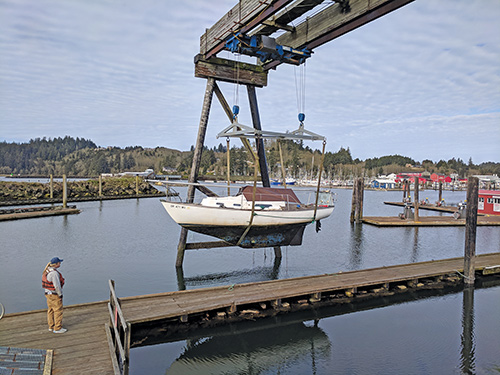
We dropped the mast and motored over to Ilwaco’s incredible old boat lift—basically a huge wooden track with one side over the water, the other side over the parking lot. We positioned the boat over the straps and watched as they slowly lifted the boat out of the water, slid it on the track towards shore, and lowered it onto the trailer. As a new boat owner, it was an amazing process to behold. The lift operator was super accommodating and when the boat didn’t fit perfectly, he used his sawzall to shorten two of the support stands on either side. He was under no obligation to help, and I still think about how cool it was of him to do so.
We did it! The boat was on the trailer, and the trailer was holding. It even survived the 20-minute drive back to the property. This was such a huge accomplishment for me. I was able to get this all done for a relatively low cost, and now I was ready to refit the boat. But I had no idea what I had just gotten myself into.
Any sense of triumph vanished as I started digging in the next day. The boat was in worse shape than I thought—her deck leaked, her portlights leaked, she needed new sails, a new head, new paint, new electronics, new everything. Not only did all the interior need to be rebuilt and systems replaced, but it turned out the bones weren’t even that great. The hull was covered in blisters and the rudder was separating from the rudder stock. With so many points of intrusion, there was nothing stopping the water from saturating the deck core, which was completely rotten. This boat was in need of a ground-up rebuild. I felt so overwhelmed.
In these moments, while considering all that needed to be done, I just sat in the boat paralyzed by my own thoughts, staring off into the woods. I would fall down rabbit holes of analysis, deeper and deeper, until a whole day would pass and I hadn’t accomplished a thing. But every time I pulled out my phone and saw that boat on my background, I would regain my composure and push on. I had to figure this out; I had to make it work.
I spent nights watching DIY YouTube videos like Boatworks Today and Sail Life to try to pick up any tips I could on fiberglass work. They all made it look so easy. I also made a friend in Portland, Wade, who was years into his own Cape Dory 25 refit. He was nice enough to offer lots of great advice.
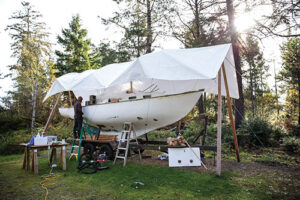
Over the next weeks and months, I set up my workspace and built a large covered structure over the boat and a small shed where I could work out of the rain. I completely stripped the boat. Every wire, every hose, every deck fitting, and every piece of wood came off and either went into storage or got tossed. I started stripping the bottom paint, and eventually the gel coat. I dug out and filled all the old deck core. I had to dig a hole in the driveway to drop the rudder, which I was able to get welded locally. But the more I dug into the boat, the more issues I found. More work needed to be done, and more money needed to be spent. I was so incredibly in over my head.
One day that summer, when I was having a moment of analysis paralysis, I was sitting in the cockpit in my head-to-toe hazmat suit, staring at the photo on my phone, when I closed my eyes and visualized myself at the helm of my boat, wind on my back, looking up at the snow-covered peaks of the fjord I was sailing through. Picturing the whale spouts around me, and dodging icebergs. That feeling is the thing that sustained me. I told myself, “I’m going to sail to Alaska no matter what it takes. I have to. I’m in too deep to give up now.”
Through the summer, I continued to chip away at the project. Every morning after coffee, I put on my hazmat suit, full-face respirator and headphones so I could listen to audiobooks while I sanded. I did this every day for weeks and months. To Moby Dick and the Count of Monte Cristo, I sanded the entire boat from top to bottom. Glassed over the hull-to-deck joint, which was a big leaking point. I added structure and rigidity to the companionway hatch in case I ever needed to walk on it. I commissioned North Sails to make a new jib and triple-reef mainsail (which I sadly never got to use). My friend, Mike, and I drove all the way up from Los Angeles with his bandsaw in the back of his car so that we could remake all the wooden deck parts out of local Douglas fir. I was on a mission to get this thing done. But looking back, I had barely scratched the surface.
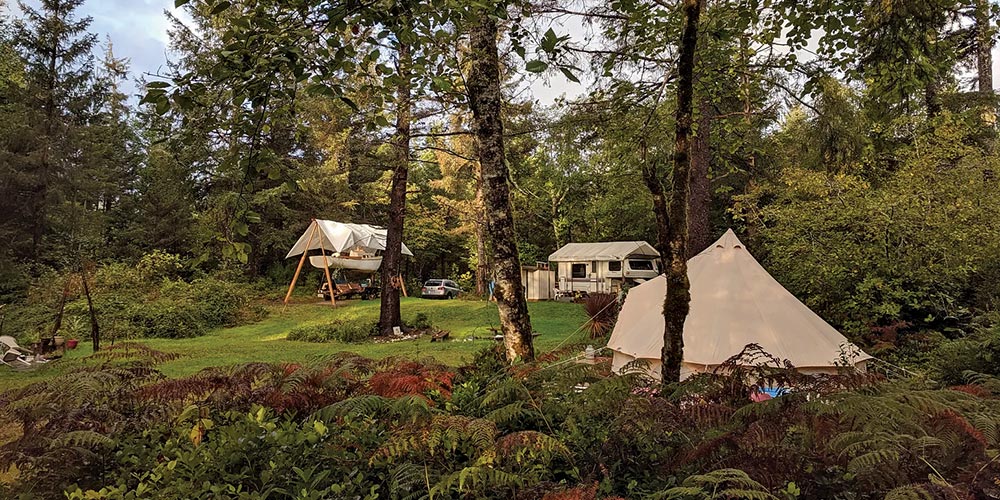
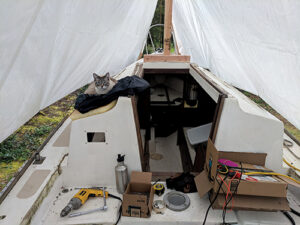
As winter rolled around, it became increasingly difficult to do epoxy work with the rain and humidity. I started focusing on things I could do inside. I made new interior cushions and worked on other small projects in my 8-by-8 shed. But after months of cold and wet, unable to make real progress under the tarp in my yard, I needed to do something drastic if I was going to have any chance to get this done.
It was now spring of 2020 and COVID had just hit in the States. I had booked a big film job down in California and was able to get down there to shoot it just before travel became restricted. That one job gave me a lot more financial flexibility, and I decided to put my earnings towards renting an indoor workspace back at the Port of Ilwaco. This way I could keep the space warm, dry, and clean and really get some things done.
The second day I had the boat in the workshop, I was continuing the dreaded sanding and fairing of the hull while listening to an audiobook. This time it was John Kretschmer’s Sailing a Serious Ocean, which is about storm sailing tactics and other sea stories. I was listening to a chapter where he presents some considerations before buying a boat. He ends the chapter with this thought:
“More cruising dreams are delayed and ultimately shattered by the false potential of saving money on the front end. Boats, even seemingly well put-together boats, are devious, and they can break your heart. Boats that need major retrofit can be downright evil. As you can tell, I am not a fan of large retrofit projects; I have never known one that was finished on time and on budget. If your desire is to get to sea, your time is too valuable to waste. Leave the boat building to the pros and find a boat that is ready to go.”
John’s sentiment hit me like a bag of bricks. I had spent over a year and many times the price of the boat trying to get it ready for Alaska. At this rate, it would take me many more years and unknowable costs before I was finished. I never wanted to refit a boat; I wanted to sail.
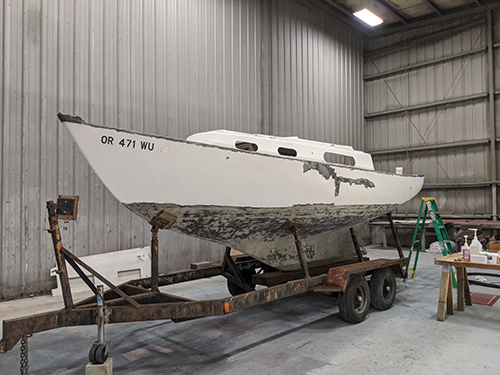
At that moment, I shut everything down, took off my respirator and suit, hooked the trailer up to the truck, and drove the boat to the dump.
I didn’t want to waste any more time on this project. Not even trying to sell her. She was a wreck anyway, completely stripped and every through-hull removed. I wanted it off my plate… now. I cried, with both sadness and relief, watching them grab the boat with the jaws of the excavator. Crunch, it ate through the boat like a chew toy. They held the boat as I drove the trailer out from under her. She slammed to the ground with an agonizing thud and was violently thrown into the pile of trash to be compacted.
It was over. Three years of effort down the drain. A friend tried to make me feel better by justifying it as boat school. He wasn’t wrong; now I knew what to look for in my next boat.
Luckily, the port didn’t make me pay for the two days I spent in the workspace, and I was even able to sell the trailer for $500. The money I had left would go towards a new boat that was ready to go.
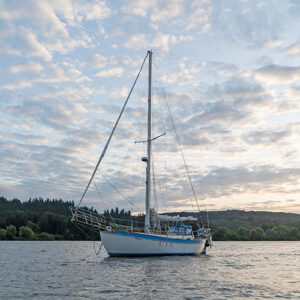
About a month later, after weeding through dozens of boats, I fell into one that wasn’t even on the market yet through a friend of a friend. Tied up at a small marina on Sauvie Island was a Westsail 32 called Konami. She was a huge upgrade from the Cape Dory. She had actual standing head room and felt like a real ship. And she had just returned from a four-year circumnavigation of the Pacific with her previous owners—a proven vessel that was ready to go. The only issue was that I couldn’t afford her, but the sellers were willing to work with me on an owner-financed loan with low interest.
I took stewardship of Konami in May 2020, and I was ready to sail to Alaska by July. It was time to go. There was nothing left in my way but the North Pacific. The only problem was that because of the pandemic, Canada and the Inside Passage were functionally closed to recreational boating.
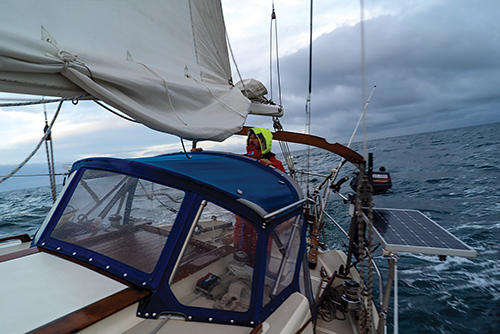
I wasn’t going to let that stop me. I would sail non-stop from Astoria to Ketchikan via the outside of Vancouver Island if I had to. Between the prevailing northwesterlies and continental shelf making for dicey seas, it was far from an ideal option.
My buddy Chris, an experienced sailor from Long Island, was willing to brave the trip with me. Six days, 900 miles, and a passage’s worth of stories later, we made it. If you had told me months earlier that I would sail my own boat to Alaska that summer, I would have thought you were bananas. I got to Alaska, just not in the way I had expected.
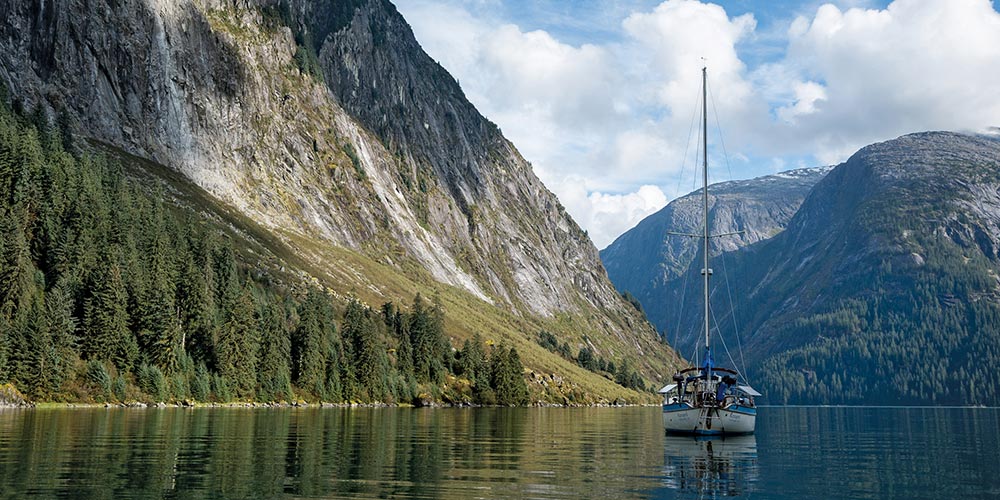
A few months later, sometime in late September, I was anchored in the incredible fjord of Ford’s Terror. An area that is only accessible for a few minutes during high slack tide—it is the quintessential Alaskan backdrop. I was on shore, walking the edge of the large river that empties into the bay when I turned around and saw Konami at anchor, dwarfed by the looming granite cliff face behind her. At that moment, I realized I was standing in the exact spot from the photo I’d set as my phone background three years earlier. I’d done it.
Andrew Tomayko is a sailor, filmmaker, and ABYC marine technician residing in Poulsbo, Washington. He sailed Konami to Alaska and south to Central America. A version of this story first appeared on his substack, andrewtomayko.substack.com. You can watch some of Andrew’s incredible film work at his YouTube Channel: @andrewtomayko, where there’s soon to be a video companion to this story.