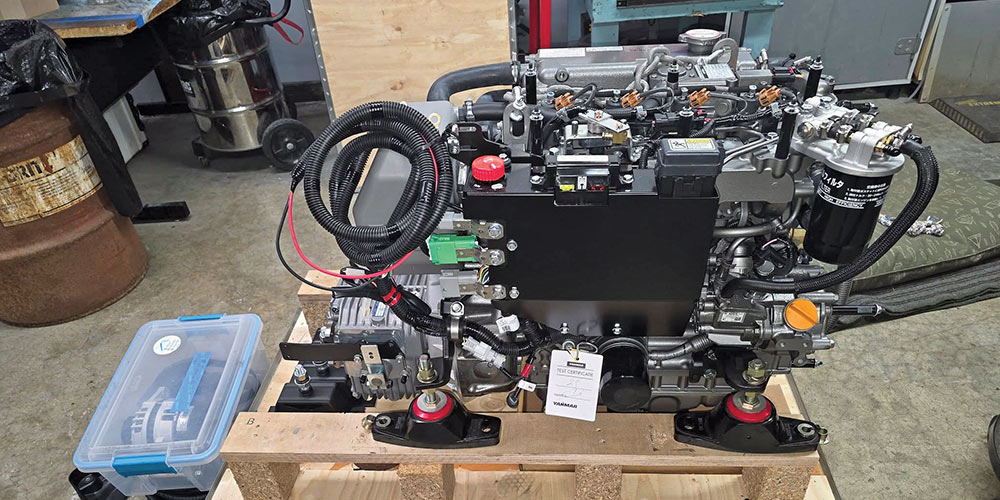
A few months ago, I finished installing a brand new factory-built Yanmar 4JH57 on a client’s 44-foot sailboat. As I completed my initial checks and started the engine for the first time, I opened the oil fill cap to check for blow-by and found a fair amount puffing against my palm. While this was normal, it made me realize the average boat owner may not understand the significance and why it’s there, not to mention what to do about it.
In my last column, I wrote an article about proper break-in procedure with your new or rebuilt engine, and while I mentioned the concept of blow-by, I didn’t really go into what it was or why it’s something boaters should pay attention to.
To put it simply, blow-by is when compression gases leak past piston rings into the crankcase or oil pan region of the engine block. The inside of an engine should have no excessive pressure build up outside of the top of the cylinder. If blow-by is present, the engine may be fitted with vents in various places to relieve that pressure so oil seals and other damage doesn’t take place.
Most of the engines at my shop for rebuilds have two common issues: lots of blow-by and relatively low hours (usually between 200-1000 hours). Blow-by is prevalent within our recreational diesel engines, much more so than you’d find in a commercial application. Common as it may be, it’s not considered to be a good thing. So how do we prevent it and why do we see this on brand new engines with no run time?
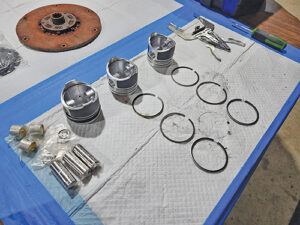
Blow-by is typically an indicator of worn piston rings, however if that is the case, why would it also be present on a new engine? Believe it or not, every engine has some level of minute blow-by, even from the factory, which is normal. Piston rings have gaps in them and, even if there are multiple rings compressed around the piston, those gaps will allow small amounts of compression gases past them; but nothing significant enough to feel by hand or affect the performance of the engine.
When an engine is brand new, with newly machined cylinder walls and piston rings, these parts have not closely “mated” together yet—hence the reason for the break-in procedures we run through on a new engine. That’s why I stress running a new or rebuilt engine harder than you’d expect and following correct break-in procedures, we need those piston rings to expand and begin to “grip” the cylinder walls, creating a very tight sealing surface that is capable of holding back a lot of pressure. The piston rings will actually form to the texture of the cylinder walls on a microscopic level. When an engine is not broken in properly, the cylinder walls never actually mesh with piston rings, but instead become shiny and mirror-like. Brand new cylinders will have a machined texture on them called cross-hatch. This is to aid the piston rings in gripping the walls, but also to help hold onto and spread engine oil. Without this textured surface, the walls will begin to “glaze” and smooth, losing their ability to hold oil and help piston rings to seal. All of this explains why a brand new engine will have some apparent blow-by. However, within the first 100 hours or so, we should see this significantly improve (reduce) as the engine breaks in.
So, what happens when cylinder walls begin to glaze and piston rings don’t seal properly? The most obvious answer is that the engine will lose power and efficiency as compression pressure will be leaking past the pistons. We need the most efficient compression action possible in order to get the best performance out of our engines.

Once cylinder walls become shiny and smooth, leaking compression will begin to push carbon and soot down past the piston crown into the ring lands or “grooves” leading to stuck piston rings. This causes even more blow-by and the problem becomes exponential. As internal pressure inside the crankcase begins to grow, owners often begin to notice oil seals and gaskets beginning to fail (specifically the front or rear main oil seals), but enough pressure can also push out other seals as well as the dipstick itself. As compression falls over time, the engine may become hard to start, become smokey during operation, and combustion will no longer be efficient, leading to even more soot formation. A tired engine is essentially on an exponential downfall until it’s rebuilt.
Blow-by is one of those things we want to avoid in any engine, there is nothing good that comes from it. Blow-by shortens an engine’s life, robs the engine of power and efficiency, and eventually will truly harm internal components of the engine over time if ignored.
For the average boater or boat mechanic, blow-by is most often seen on tired or worn out engines and, as discussed, it can also be found with very new or recently rebuilt engines.
For everyone with engines aged between brand new and super tired, if you discover some blow-by, there’s not a good way to reverse the damage. But there’s good news: a diesel with some blow-by can still work—possibly for a long time—but is unlikely to achieve maximum power and performance. Owners of previously-owned boats with blow-by may not be responsible for the presence of the phenomenon or its related damage, but should note its presence and act accordingly.
Even though blow-by is not reversible on an older engine, running a diesel to factory specified parameters—longer and harder than many boaters think—can help prolong its life by reducing the associated harms of blow-by. There are a handful of products that suggest they might help, though they’re not more than a band-aid fix. Instead of or in addition to those products, I recommend changing your oil more frequently, which can remove contaminants like soot and metal fragments while helping everything run as smoothly as possible.
Ultimately, if you have blow-by on an engine that’s beyond its break-in period, there’s likely to be a repower sometime in your future. Proper hard-under-load use of the engine can help you minimize the effects of blow-by and potentially push a repower out a number of years so you may plan and prepare for it. Running a diesel hard and to its recommended loads, especially when newer and in its break-in window, is the best way to ensure a long “blow-by free” life for any engine!
Meredith Anderson is the owner of Madame Diesel, LLC, where she operates a mobile mechanic service and teaches hands-on marine diesel classes. She recently launched the Madame Diesel YouTube channel, and has a video related to this topic: www.tinyurl.com/cylinder-death