 The summer sailing season has come to an epic close with some absolutely beautiful weather, ushering us into the always-too-short Pacific Northwest autumn. In September I found myself finally underway on my own boat for a few weeks after a busy summer fixing other people’s boats and, as I pulled back into my home slip, the work on my engine was not done yet. It was time to make sure my little diesel was ready for winter.
The Salish Sea typically presents us with wet and cold winters, and since most of us are fair weather sailors, our boats don’t get used nearly as much in the offseason as they do in the summer. In order to take good care of our engines and other onboard systems, some long-term storage prep is needed. In this column, I will cover a range of winterizing tasks that should be completed to help ensure your boat and engine are ready to go next season.
OCCASIONAL USE or MONTHLY OPERATION
For those of you who live aboard like I do, or those planning to visit the boat fairly often to run your engine or get underway, not too much has to be done in terms of long-term storage preparation. I do, however, highly encourage everyone to close all engine raw water and other unused seacocks, keep a heater and dehumidifier running when needed, and top up your fuel and treat your fuel tanks with biocide.
Even though I’m onboard every day, I still keep my engine seacock closed regularly when the engine is not in use. If it’s going to be really cold, or I am not around and the forecast suggests cold weather, I tend to keep an oil-filled space heater running on low with my engine hatch open just in case. While Washington typically doesn’t see too much in the way of hard freezing, it has happened and we have already seen local temperatures as low as 28° Fahrenheit this October. Keeping fuel tanks full will prevent condensation from forming on tank walls thus creating a water problem, which will eventually be an algae problem in your fuel. All of these practices represent practical risk mitigation.
If you are finished with your cruising season and it’s time to change your oil, now is the time to do it. I change my oil at the end of my cruising seasons to prevent any issues with acidity or moisture inside the engine over the winter.
I also run my engine at least once a month—remember that it’s important for it to be under load for a good half-hour or more either at the dock or while underway. Checking and running my engine monthly allows me to repair anything that might be developing long before I want to get underway more regularly for spring and summer cruising.
Another piece of advice I often share is to use the early part of the offseason to evaluate whether there are any large projects to complete with a boatyard or contractor. Then, make sure to get on someone’s calendar now, as most contractors will be maxed-out come spring.
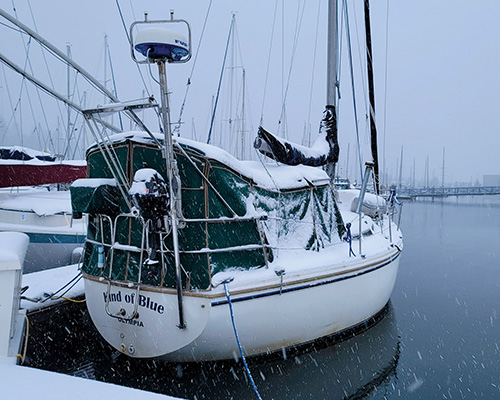
LONG-TERM WINTERIZATION
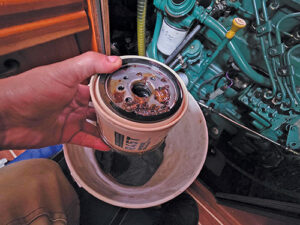
For those of you who are snowbirds or simply prefer to leave your boats over the winter, your engines may not get run for an extended period of time. Unless you have someone you trust to check and run the engine, you most likely will need to winterize for long-term storage. If you plan on letting the engine sit for more than a month without running it, I would recommend completely winterizing your engine and other systems for the potential cold snaps that come through.
Winterizing includes everything I have stated above: topping off and treating your fuel, keeping a heater and dehumidifier running, closing all seacocks except cockpit drains or other critical ones, and servicing what you need to on your engine. To protect against potential cracks and fractures in hoses and fittings from freezing and thawing, winterization also includes running a special antifreeze through your raw water and fresh water systems.
A lot of the water in Puget Sound is somewhat brackish due to the influence of various rivers, creeks, and other runoff. While pure saltwater may not freeze as readily as fresh water, the fresh water at the surface of our local waters can freeze more quickly than you’d think. Engine repairs for blown heat exchangers, hoses, and through-hulls can be very costly, so having antifreeze in the system will prevent that.
Some boat owners may choose to have a professional handle winterization, but it is a doable project for many DIYers. To winterize an engine, close your raw water intake and run a hose into a bucket of antifreeze while the engine is running for a short period to pull the antifreeze into the raw water system. With certain setups, you can have a friend start up the engine while you pour a few gallons of antifreeze into an open sea water strainer with the seacock closed. When you see the antifreeze come out of the exhaust, you will know it has made it though your engine’s raw water system, and you can shut everything down and reconnect your hoses.
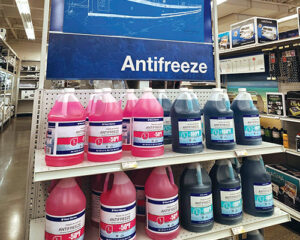
When spring arrives, simply reopen your seacock and run the engine like normal, as the special winterizing antifreeze used for this purpose is biodegradable. This type of antifreeze is sold at most marine stores and chandleries. Make sure you are NOT using regular engine coolant or antifreeze from an autoparts store. If you need help, most boatyards and contractors should be able to help you winterize these systems before you leave the boat for an extended period.
DON’T FORGET YOUR OTHER SYSTEMS
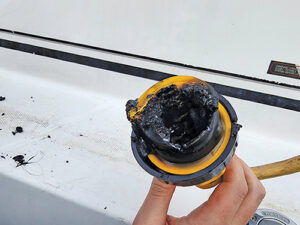
While your engine is important, so are your other systems onboard. Things like making sure your shore power cables are in good condition, your onboard electrical is in good shape, your fresh water system is winterized for long-term storage, mooring lines are secure, and cockpit drains are free and clear can really ease a lot of stress when you can’t get to the boat. As a liveaboard, I can check things daily and adjust as necessary, and it has paid off when my boat and I have stayed safe in some really uncomfortable winter storms. If the span between checks goes from days to weeks or months, it only increases the need to be thoughtful, proactive, and strategic in your preparations.
PREVENTION IS KEY
While most winters in the Pacific Northwest are fairly mild compared to other northerly locations, it’s not uncommon for us to see stretches of days or even weeks with temperatures below freezing, and this can result in a lot of damage for unprepared owners. I cannot stress enough the importance of closing your seacocks and properly winterizing your water systems if you are going to be away.
Also, if weather moves in, asking someone you trust at the marina to briefly check on your boat is always a good idea, especially if there is significant snow or a hard freeze. I am always happy to check on friends’ and neighbors’ boats while they are away, so don’t be afraid to reach out and lean on your community.
Time invested making sure your boat is in good stead while you’re away for any amount of time is always well-spent. It can save the day when the weather takes a turn and you can’t make it to the marina.
Meredith Anderson is the owner of Madame Diesel, LLC, where she operates a mobile mechanic service and teaches hands-on marine diesel classes to groups and in private classes aboard clients’ own vessels.