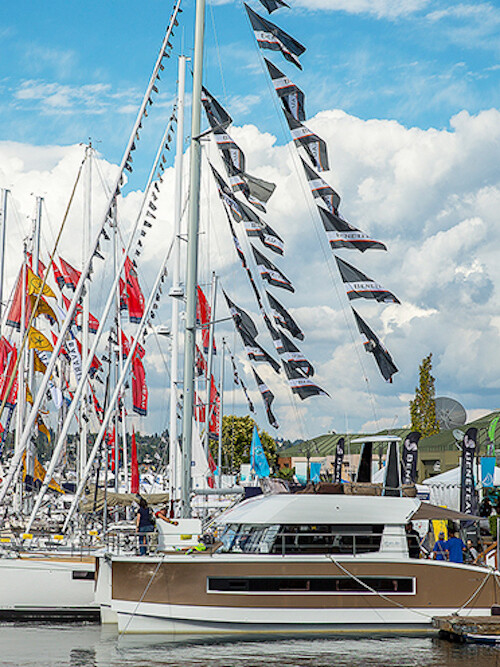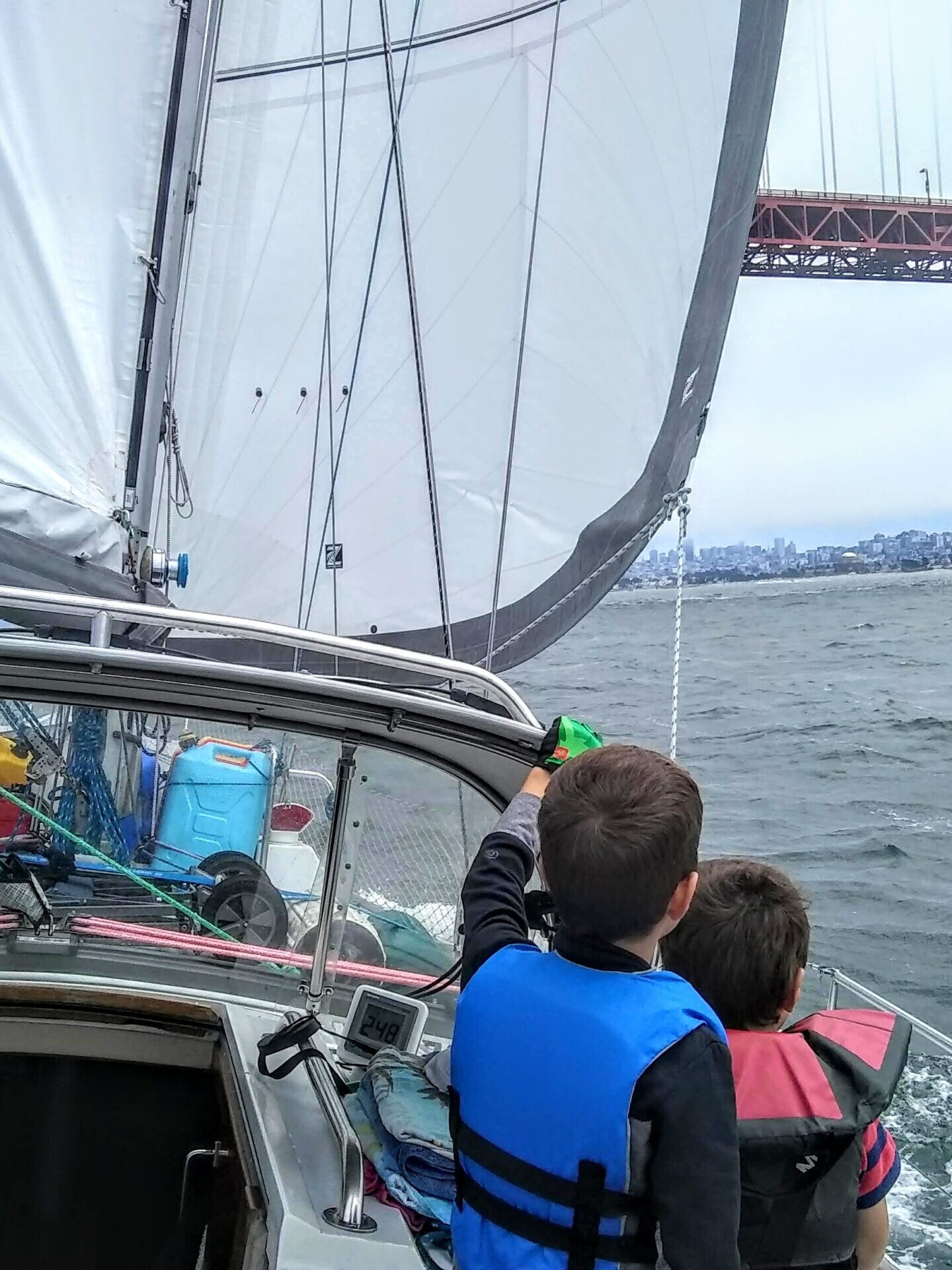
The Magic of Wood, from Craft to Community

It all began with a single question on a sunny afternoon at the Classic Yacht Association Show in June 2025. I was standing next to my 1970 Alaskan 46, Arianna, when a friend who’s also a boat broker asked. “Do you mind if I send a few people your way? They’re considering buying a boat, but they hesitate when they hear it’s made of wood.”
That short conversation stuck with me. He wanted those buyers to talk with me because I have stood where they were. When I first began looking at boats, I assumed wooden ones were far harder to maintain than fiberglass—endless sanding, creeping rot, constant vigilance. But over time, I learned that if you’re comparing boats with the same amount of brightwork, the upkeep isn’t wildly different.
There are differences when you’re looking at wooden boats. With wood, you can’t fall behind. You stay ahead—fresh varnish, sealed paint, tight seams to keep moisture out. Every wooden boat owner learns this early. And yes, there’s that nagging fear that something expensive might be hiding below decks. But I eventually realized that worry isn’t really about wood; it’s about boats in general. The unknowns come with the territory, not the material.
Maybe that’s why the question stayed with me. At first, I imagined the conversation would be all about the practical realities—the work, the worries, the questions every new buyer has. I understood those parts; I’d lived them. But the longer I thought about it, the more I realized my experience had grown into something beyond the practical. What I found wasn’t a cautionary tale; it was simply the truth. If you stay on top of routine work, a wooden boat doesn’t hide more trouble than anything else afloat.
Because the real story of owning a wooden boat isn’t about extra work. It’s about the relationship that forms through that work—the way attention deepens connection. Wooden boats ask more of you, but they give something back: a sense of stewardship, accomplishment, continuity, and belonging to something bigger than yourself.
Every wooden boat carries a backstory. A lineage of builders, owners, yards, repairs, and waters crossed. Around these boats, a community forms: owners you meet on the dock, shipwrights who pass by on their craft, and the clubs and institutions that keep the knowledge alive.
If I were to talk with a prospective wooden boat buyer, I’d want them to understand the breadth of wooden boat ownership that I had come to realize. Not just the maintenance, but the meaning. The work isn’t endless toil; it’s steady care. But there was more—something harder to explain, but important to include.
Owning a wooden boat isn’t just about keeping a vessel afloat. It’s about keeping something alive: a tradition, a craft, a way of being connected. With a good wooden boat, you’re never really the final owner. You’re the next steward in a long, unfolding story.
That moment got me wondering: Was my experience unique? Or did other owners feel this same mix of pride, responsibility, and quiet satisfaction? I began asking around—talking with owners, shipwrights, and brokers—and what I heard surprised me. These weren’t just boats. They were lifelines, family members, adventures, heirlooms, heartbreaks, and homecomings.
To understand why wooden boats matter to so many, I had to start with my own story. Arianna taught me a lot about voyaging, upkeep, community, and even myself. Reflecting on that experience, I began to get a glimpse into a larger world—a world I’d soon discover through the stories of others.
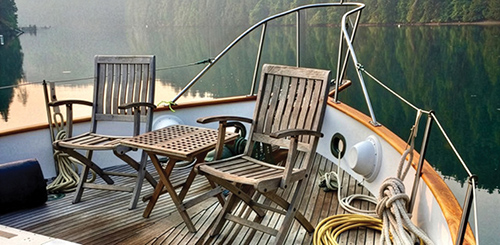
The Pull
I began my love of boating in sailboats. Even before my teens, I was sailing out on lakes, learning the feel of wind and water. My first boat was a sailboat, and for years that rhythm shaped how I understood the world afloat. As I got older, I found myself drawn to trawlers. The pace wasn’t so different—still a slow, steady motion through the water—and the mindset felt familiar. Navigation was the same puzzle I’d always enjoyed: reading currents, timing passages, planning ahead. And the seamanship I’d learned under sail—docking, anchoring, lines, knots—carried over naturally. What changed wasn’t the water or the skills, but how I wanted to move through that world: steadier, more comfortably, and with a warm wheelhouse in Pacific Northwest weather.
Still, something from those sailing years stayed with me: a connection to tradition, to boats with a sense of history. Even though my sailboats were fiberglass, the way they worked felt ancient—wind, hull, balance, the same physics sailors have lived with for thousands of years. And in an unexpected way, trawlers echoed some of that. Their steady, purposeful motion felt rooted in the same values that first drew me to the water.
So when I began shopping again, I assumed I’d end up with a fiberglass pilothouse trawler—practical, well-suited to our local climate, and comfortably enclosed. But most were larger than I needed or priced out of reach. I found myself drawn instead to the traditional tri-cabin designs with their timeless lines and generous interiors, especially those with a cockpit stern that made boarding—especially for our dogs—so much easier.
One listing kept resurfacing: a 1970 Grand Banks Alaskan 46, built of wood by American Marine. Each time I saw it, I’d scroll past. “Wooden,” I’d think, and move on. Still, something about that boat kept tugging at me. I’d scroll past her, then circle back, as if some quiet current wanted me to look again. Maybe it was her lines, or her name, or simply the way she carried her age. But looking back, it was something deeper too—something I couldn’t have explained then. Wooden boats don’t just connect to tradition in how they move; they connect to it in how they’re made. Shaped planks, caulked seams, human joinery—you can feel the craft in the structure itself, even before you know why it matters.
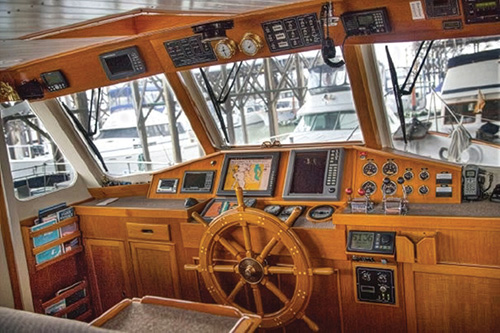
Then I climbed aboard. Twenty tons felt right for her length. The covered stern seemed made for Northwest rain. Inside, the teak interior felt warm and alive—cabinetry fitted by human hands, bronze hardware with a patina earned over decades. In the pilothouse, the day berth and purposeful layout felt like a mariner’s decisions, not a stylist’s. Instead of suspicion, I felt something else: trust.
I’d heard the warnings all my life—rot, varnish, money pit—but the lines, the joinery, the way wood holds light and sound pushed back. Wooden boats felt alive, not just because the material once grew, but because you can still sense the makers in the work. My certainty slipped. I made the appointment.
The Leap
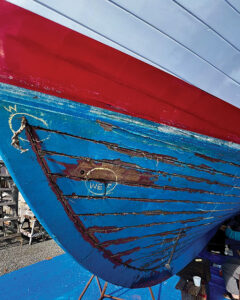
At some point, curiosity becomes commitment. I’d been searching for months, reading everything I could find about wooden-boat ownership. What I discovered, though, were mostly books on building or restoring wooden boats—not what I was after. I wasn’t looking for a project. I wanted a boat that was already sound, something I could care for, not rebuild.
So, I set out to learn how to tell the difference. As a woodworker, I had a sense of what rot looked like, but on a boat like Arianna, much of the structure was hidden. I knew to watch for soft wood beneath paint, rusted fasteners, or moisture trapped where it didn’t belong. But I also noticed the good: the tight joinery in the cabinetry, dovetail drawers, inlays, and the carefully placed bungs that covered every screw head. These weren’t just signs of craftsmanship, they were signs that someone had paid attention.
The condition of the boat wasn’t the only thing that mattered, so did the people behind it. I paid close attention to how the current owner spoke about her. Was there pride in his voice? Did he know her history, her quirks, her care? The answer was yes, and it showed. The interior was immaculate. Every item had its place. Every surface was clean but not sterile, well-kept, lived with. He hadn’t just owned the boat; he had cruised it, relied on it, and adapted it thoughtfully over time.
He had chosen lighting and plumbing fixtures that matched the boat’s character, not just whatever was available. He’d kept the systems simple and reliable, in keeping with the era she was built—a time when boats favored straightforward, serviceable design over complexity. There were no flashy upgrades for the sake of resale, only choices that respected the boat’s design and purpose. I came away with the sense that this was a boat with continuity, one that had been passed along, not passed over.
That made a difference to me. Because in the end, it wasn’t just about inspecting wood or estimating future repairs, it was about sensing the integrity of the boat and the care it had received. That’s what tipped the balance from hesitation to trust.
Still, I wanted certainty. I hired a broker to represent me and a surveyor who specialized in wooden boats. We went over every inch, camera in hand. As we moved through the compartments, the surveyor pointed out details to me, “see this plywood edge? That’s where problems usually start, but this one’s solid.” Each comment like that felt like a small vote of confidence. A few minor issues surfaced, and we adjusted the price accordingly.
A second surveyor checked the mechanical systems, which were old but sound. Everything worked. Slowly, the columns on my list shifted: risk gave way to reward. I built a simple table—must-do before launch, should-do in year one, nice-to-do when time allows—and filled it in. Numbers turned into choices, and choices into calm.
In the end, the decision wasn’t about logic alone. It was about trust, both in the boat and in myself. On a quiet afternoon, pen in hand and a small knot in my stomach, I signed the papers.
The Reward
Sanding, painting, varnishing, there’s no avoiding the work. All of those tasks require time, patience, and a willingness to accept the results of your own effort. But there’s a rhythm to it. You think differently with a brush in hand. You notice light, dust, wind; you learn to leave a good thing alone.
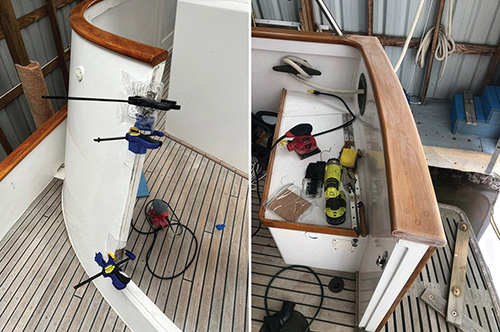
Right: Sanding, sanding, and more sanding is a key to good brightwork.
There’s also a deep sense of accomplishment, whether you take it on yourself or work alongside someone more skilled to carry out the work with intention. Some owners do most of the work. Others focus where they can and leave the rest to trusted hands. Either way, it’s not about doing everything—it’s about staying engaged, learning what matters, and shaping the boat to your needs. In return, the boat shapes something in you. This last varnish cycle reminded me I’m older now. The work felt heavier, but still just as rewarding. There’s a different kind of meaning that comes with effort as the years go on, not despite it, but because of it.
Arianna didn’t just sit pretty at the dock. She carried me—and my family—safely, patiently. First, hesitantly, into the Gulf Islands and Desolation Sound. Then through Johnstone Strait to the Broughtons. And finally, around Cape Caution to Southeast Alaska. With each mile, I learned to stay calmer at the helm, more deliberate with weather windows, humbler with tide gates. She was steady even when I wasn’t. I didn’t rush. She let me earn every new destination.

Some fjords felt like sailing through Yosemite; whales surfacing with the quiet gravity of planets; a day with two wolf packs, one trotting along the beach within a hundred feet, another swimming through an inlet across our dinghy’s bow. The voyage north had its challenges: a tough crossing that dislodged a sensor and caused the bilge pumps to chatter until a nearby boater in a desolate cove came aboard to help; a medical detour where the kindness of the Canadian Coast Guard and Bella Bella’s hospital turned a problem into a story; and, in familiar waters, the day I learned for the thousandth time that charts deserve respect.
Even with all that, it wasn’t just the scenery that stayed with me, it was the feel of being at sea on a wooden boat. They move differently. There’s a softness to the motion, a quieter rhythm as the hull works with the water rather than against it. The boat feels alive, not mechanical. You can build a vessel from a dozen materials and make it strong, fast, and dry, but a wooden boat has a character that can’t be replicated. The difference is subtle, but you sense it in the way she rides a swell or settles at anchor—like the difference between fine leather boots and rubber ones. Both keep you dry, but only one seems to be yours.
Out on the docks, that effort and those stories never go unnoticed. Wooden boats draw people in. They stop, point, and ask questions. Some bring memories: “My father had one just like this.” Others spark curiosity: “How much work is it, really?” The right conversation can turn into friendship. More than once, I was asked whether Arianna was related to Fleming Yachts — maybe a backstory to investigate? I finally wrote to Tony Fleming himself. To my surprise, he replied, from his Venture anchored in Alaska. He’d been at American Marine in Hong Kong when the Alaskan 46s were built, designed by Arthur DeFever, with later Alaskan 49s by Bob Dorris. When he founded Fleming Yachts in 1985, the Alaskan was an inspiration for the concept, but the actual design and engineering are entirely different. The connection wasn’t genetic, but spiritual—a lineage of purpose and design.
 If the dock is where stories are told, the boatyard is where they’re kept alive—where the hands of shipwrights, painters, and varnishers maintain the vessels, and thus their stories. I’ve watched a shipwright caulk a seam with the quiet confidence of a surgeon: oakum fed into the gap, the mallet’s tap-tap-tap driving the iron, the hull stitched together. Painters who can tape a sheer by eye. Varnishers who flow a brushstroke so clean you wonder if gravity works differently for them.
I’ll admit, my early days in the yard were awkward. I had questions I didn’t know how to ask and opinions I hadn’t earned. Over time, I learned to watch more, talk less, and say thank you when someone’s craft kept my boat safe.
After a decade aboard Arianna, I realized that wooden-boat ownership isn’t just a personal adventure, it’s a culture. Everywhere I went, from boatyards to marinas, I met people with stories that rivaled my own: restorations rescued from near ruin, family legacies kept alive plank by plank, voyages made possible by craftsmanship and nerve, quiet acts of care that only wood seems to demand.
Each conversation felt like opening another logbook. Some owners shared stories of the history within their planks; others talked of friendships built over varnish pots and tidal gates. That’s when I realized my story was only one chapter in a much larger narrative—one that spans generations, harbors, and oceans.
If you’ve ever hesitated at the word “wood,” I understand. Start with the right questions. Talk to those who’ve done it. Listen to the stories on the docks. They’re the real reason wooden boats endure. In the end, the best part of owning a wooden boat isn’t just the boat—it’s the lives that intertwine and experiences that unfold when you step aboard.
Leroy Lewis lives in Port Orchard, WA. The realizations he discusses in this article became the spark for Beyond the Boat, a podcast he hosts sharing the stories of wooden-boat ownership through the voices of those who live them—owners, shipwrights, and brokers alike. Of the podcast, he says, “We talk about beginnings and boats, yes, but mostly about people: what drew them in, what keeps them sanding and sailing, and why it’s worth it. Some guests chase history; others chase freedom, beauty, or belonging. Their boats vary in size and pedigree, but their reasons share a familiar heartbeat—the joy, pride, and humility that come from caring for something built by hand. Beyond the Boat isn’t about perfect varnish or museum finishes. It’s about the living connection between people and their boats—the same connection that drew me to Arianna and keeps me listening for more stories.”