It all started the night before the race at the skipper’s meeting. We were invited aboard the 100-year-old National Historic Landmark tall ship, Adventuress. Hosted by friendly staff and crew from Sound Experience, the beneficiary of this year’s Blakely Rock Benefit Race—whose mission is to educate, inspire, and empower the next generation of mariners—we boarded the impressive wooden ship.
We toured the vessel and shared warm welcomes from sailors that would soon become our competition. The skippers for Sloop Tavern Yacht Club’s (STYC) 2026 Blakely Rock Benefit Race packed around the table in the main cabin of Adventuress, in the same place that future young mariners would spend up to 6 months together—learning, sleeping, and eating. After being introduced to Catherine Collins, Executive Director of Sound Experience, Shannon Renner (STYC Race Coordinator and Past Commodore) asked for a moment of silence to remember Carol Pearl—STYC Past Commodore, club historian, champion, mentor, and friend to whom the race is now dedicated. The actual skipper’s meeting was short and sweet.
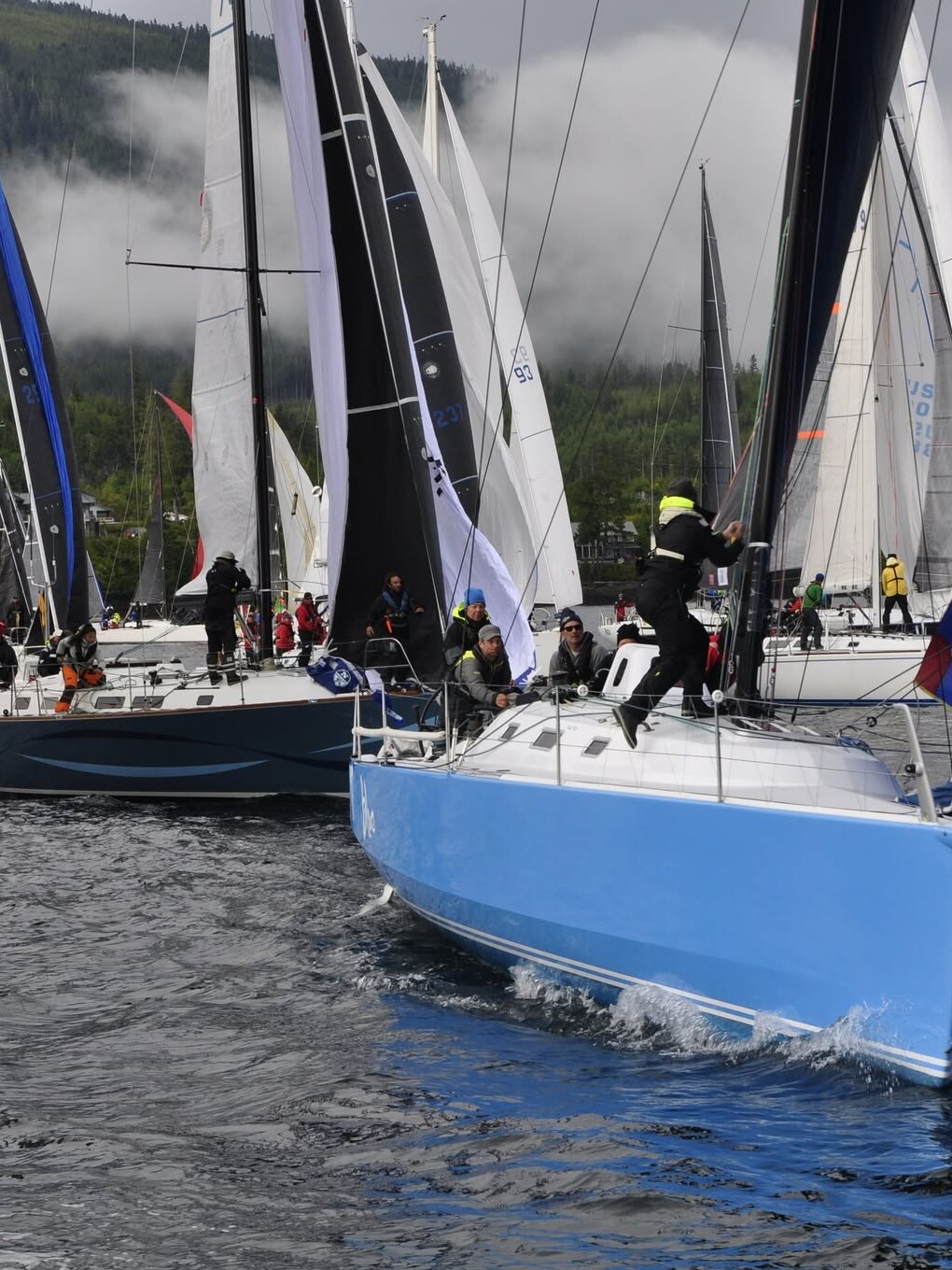
The morning of the race was cool and drizzly as our crew gathered in the early morning on the Catalina 36 Avalon, which is docked just inside the Ballard Locks. Our Class 3 included the Baba 40 Airloom, a Catalina 36 sistership with an identical rating Bardo, Pretorien 35 Seeker, Tartan 3800 Wind Dancer, Yamaha 36 Rising Sun, and Hunter 40 Solara, the fastest-rated boat in the class.
As we got our bearings in the starting area in the 8-10 knot southerly, we thought about the day’s course, which would send us to Blakely Rock first, then back around Meadow Point before the finish. It looked like a port start at the committee boat was the favored place to be, but we decided on a more conservative approach by coming in on the pin-end on starboard. This worked well for space at the line and we quickly tacked onto port just after the starting signal. The race was on. What we thought was a good start quickly melted as Solara was immediately on our windward hip, soon taking our wind and passing us as if we were standing still. We worked our way above them and found some clear air.
Looking around for the competition, we saw Seeker was high of us on port tack in a favored position. It quickly became apparent that Solara and Seeker would be our primary competition. Rising Sun also had a relatively good position, about 5 boat lengths to leeward and slightly behind, keeping pace and possibly gaining on us.
Holding on port tack towards West Point, the entire crew shared their thoughts on strategy, trying to make a call on when to cross Puget Sound. We wanted to go early because we knew the ebb tide would kick in around noon, but we didn’t want to go too early. We took a hitch toward Discovery Park and, with Solara and Seeker still to windward, we contemplated taking a couple of more tacks to catch more outflow from the locks. Instead, we held our ground until we were clear of West Point and then tacked towards Seattle.
At that point, we were watching Solara and Seeker, waiting for them to tack and head across the Sound, but they kept going and eventually we made the call to cross the Sound first.
Surprisingly, going against the expected ebb, we were doing a consistent 5.8 to 6 knots across the Sound and held our course for a long time toward Bainbridge Island until we got to the Tyee Shoal Junction Light. From there, it was only two more tacks and we were around the backside of Blakely Rock. As we were approaching the shoal, we traded a couple of crossings with the Peterson 34 Tonic, far ahead of their competitors in Class 4. We later found out they were first in their class, first overall, and winner of the Roland Littlefield Church Performance Trophy for the race, which must have meant we were in the right place at the right time.
Prior to the start, we had contemplated how we would set the kite given the wind conditions and had decided to go for a jibe set with the spinnaker on port after rounding Blakely Rock. While not the fastest maneuver, it set us up nicely for the return trip across the Sound. After rounding, Rising Sun magically appeared just ahead of us, but it seemed to take them a long time to set their beautiful red spinnaker. We pulled ahead and began our trek across the Sound. At this time, we could see Solara’s large kite much farther ahead, but we focused on staying fast—coming up in the lulls and falling off in the puffs to keep pressure in our new asymmetrical spinnaker.
We kept that starboard tack all the way across the Sound, working the puffs. About a half mile from West Point and quite a bit inland, we made our first jibe and headed between the West Point buoy and Discovery Park. We watched the depth meter carefully as a crew called out the depth, 10…9…8…5, until it started to rise again and, soon thereafter, we made our last jibe towards Meadow Point.
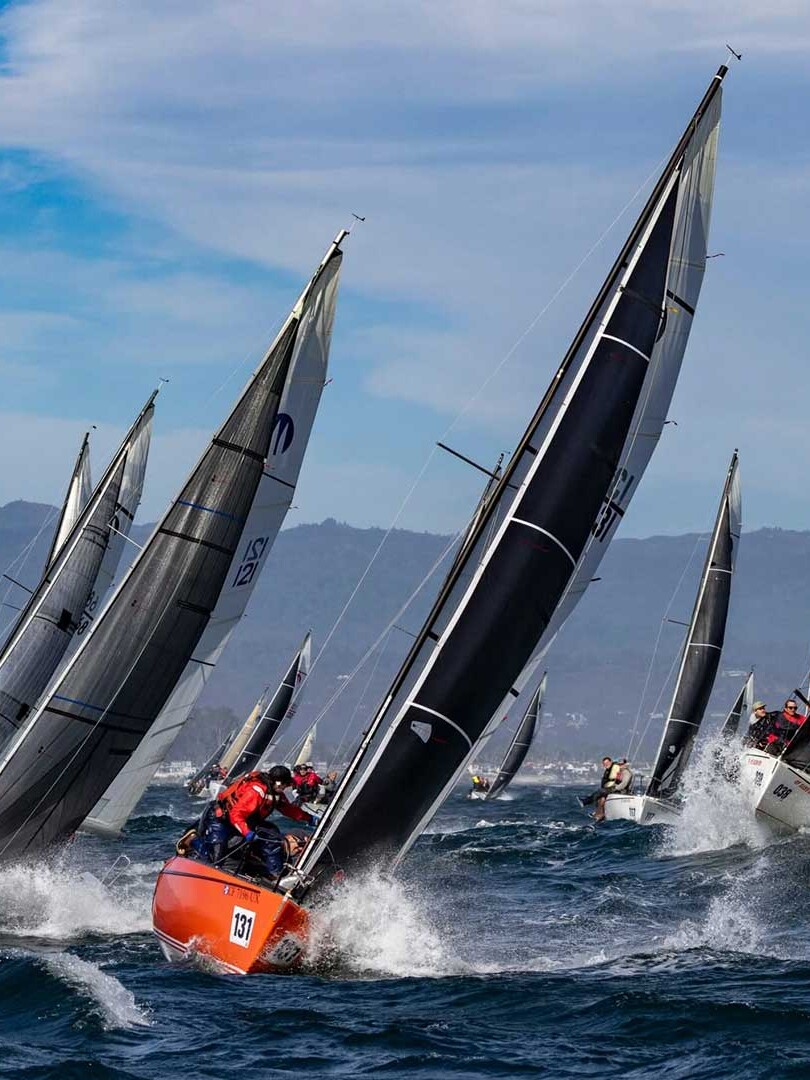
Most of the fleet was still behind us and we seemed to catch a good bit of breeze as we stayed clear of the start/finish line. The great thing is that we were in light traffic all day only getting rolled by the Santa Cruz 52, Escargot, and Flying Tiger, Anarchy, as we got closer to Meadow Point. Otherwise, it was a straight shot.
At the Meadow Point buoy, things started to fall apart. We dropped the spinnaker too early and had to “waddle” our way the final few yards to the mark. Rounding just ahead of Olson 29 Sabotage, we headed towards the beach. Sabotage almost immediately tacked away giving us room, and we tacked after them before Aerodyne 43 Freja could block us out. Soon after, we took a hitch east to avoid downwind traffic, but tacked out yet again escaping light wind near shore.
It was about this time that we noticed Solara, so far ahead on the downwind leg, had not yet finished. The wind was light, the current against us was strong, and progress was slow. The tension onboard was palpable. Looking for any speed advantage, the crew jumped into action. We loosened the jib halyard, eased the outhaul and backstay, and moved the jib cars a bit forward. Crossing traffic started to increase as many boats gained from behind. Worse yet, we were not making the finish pin.
Seemingly helpless and moving slowly, we watched up ahead as Solara crossed the finish line. Wondering if we could catch them on corrected time, we started the timer and continued our agonizingly slow approach to the finish. Making our penultimate tack, we held starboard between two J/105s and unintentionally caused one of them to take our stern. One last tack and we crossed the line.
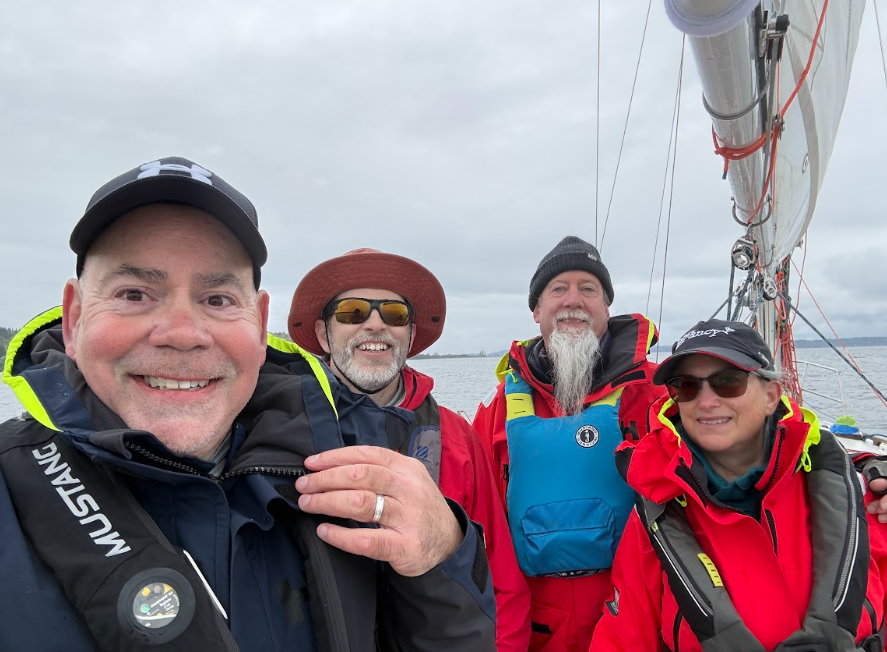
Then, it was a waiting game to see who might catch us from behind. Judging from the AIS track, considering the wind and current, we sailed a surprisingly efficient course. Most of all, the Avalon crew—Tim Divine, Trent Piepho, and Sara Longley—whose flawless execution, positive demeanor, and excellent collaboration and communication, made the day’s racing experience one that won’t soon be forgotten. It was a proud class win and great Blakely Rock for Avalon, and it seems good times were had by all around the fleet—and all for a great cause!
Results can be found at www.styc.org